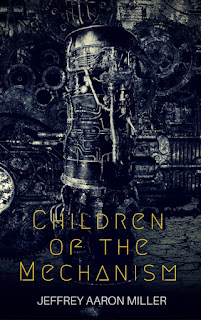
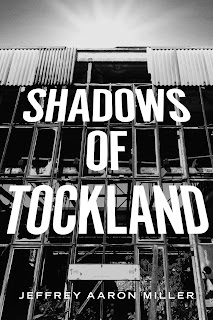
One of my more well-reviewed novels is a post-apocalyptic circus story called
Shadows of Tockland. Before it was a novel, however, it was a short story I wrote in 2009. Now, the sad thing about this particular short story is that it was slated to appear in a circus-themed magazine called
Sideshow Fables, but the magazine went defunct shortly before the issue with this story appeared. Consequently, although I sold it, nobody ever read it. However, a modified version of this story appears as an incident in the novel.
So without further ado, here is the original short story:
Cakey and the Rubes
By
Jeffrey Aaron Miller
The knife wobbled as it spun, and Cakey the Clown knew he was going to miss the catch. He fought the instinct to reach for the straying blade. He had three others in the air and couldn’t afford to catch one at the expense of the others. And if it did fall, the crowd would love it. Nothing the rubes liked better than danger. He let it go. The handle of the knife brushed the tip of his middle finger and headed for the ground.
It was a one in a million shot. With the sound of Telly tumbling head over heels behind him, and Karl making rude noises at the women in the front row, Cakey felt the blade of the throwing knife pierce the thick leather of his oversized shoe and impale itself in his foot. It felt like an electrical jolt running up his leg. Then came a burst of agony, as if he had plunged his foot into ice cold water. He lost all of the knives. They bounced and clattered on the stage.
“Ladies and gentlemen,” Telly said, finishing a backward somersault and landing on one foot. He was as yet unaware of the tragedy unfolding beside him. “The All-American Clown Crew Revue!”
Cakey bit back a scream. His first concern was for the rubes. He glanced up at the crowd to gauge their reaction. A sea of scabby faces, and all eyes on him. Some gaped, wide-eyed, in shock, but quite a few shook with excitement, thumping their knees with their fists. One young boy laughed so hard, he fell out of his chair. All of them had patchy hair, missing teeth, dirty faces, threadbare clothes, but they had paid their pennies. That was all that mattered.
Cakey saw the new kid, Daniel, standing in the back corner, covering his mouth with both hands. Baptism by fire. And then Cakey’s leg crumbled, and he went down. His vision dimmed, but he saw a puddle of blood on the stage, and Annabelle rushing to his side. Telly strode to the edge of the stage, raised himself up straight and tall, all four feet of him, and waved his top hat in the air.
“That will have to conclude tonight’s performance, ladies and gentlemen,” he said. “We hope you have been duly entertained.”
And the last sound Cakey heard before he passed out was a symphony of boos and hisses.
* * *
Daniel tried to keep out of the way. He took the chair in the back corner of the trailer behind the sink. Cakey had his foot up on the table, a mug of some frothy brew in his hand, while Annabelle tended to his foot. The knife had pierced right between his first and second toe, but she kept saying it looked worse than it was as she washed and cleaned it.
“Well, kid, that’s your first taste of circus life,” Telly said. He sat at the dressing table, removing the grease paint from his face with a rough hunk of a sponge. “What do you think?”
“I don’t know,” Daniel said. “Is it always like that?”
“I had to call it off early,” Telly said. He slipped the rainbow-colored wig off his head and set it on a wooden stand beside the mirror. “Other than that, yeah, that’s pretty much how it goes.”
Karl, who stood near the door of the trailer folding up his costume, let out a great guffaw. “The rubes love it when we get hurt.”
Daniel didn’t like the look of Karl, a great big barrel of a man with a thick moustache and a broad face, and he liked his act even less. Karl performed as Touches the Clown, and his whole shtick consisted of making inappropriate comments and rude noises at the audience. His makeup was a mess, and he had done a sloppy job of removing it. He still had streaks of white by each ear and along his neck.
“The danger is part of the act, kid,” Cakey said, wincing as Annabelle wound a makeshift bandage around his foot. “They eat it up.”
Of all the clowns in the show, Cakey impressed Daniel the most. He carried himself with authority, and the makeup on his face, which he had not yet bothered to remove, looked as smooth as a layer of acrylic paint.
“What did you expect it to be like?” Telly asked, rising from the makeup table and patting down his face with a washcloth.
“I don’t know,” Daniel said. “More like I read about in the history books, I guess. Circus clowns are supposed to be silly and have fun and make people laugh.”
“This ain’t a history book,” Cakey said. He waved his hands at Daniel and turned to Telly. “Where’d you pick up this kid?”
“Back in Winslow,” Telly said, unbuttoning his coat. “Don’t worry about it, Cakey. Go easy on him.”
“History books, he says,” Cakey replied with a look of disgust.
Daniel, feeling a flush creeping up his cheeks, averted his gaze.
“He’ll be fine,” Telly said, tossing his coat onto a stool and flopping down on a couch. “I got his shtick all worked out. Disturby the Clown, we’ll call him, and his whole thing will be that he’s cuckoo. That way, he can be the butt of the gags, and if the audience ain’t having a good time, he can really ham it up, make ‘em worry, see?”
Daniel didn’t like the sound of any of that. He could juggle a bit and do some acrobatics, but being the butt of gags didn’t sound like fun. He envisioned being slapped and kicked and knocked around while all the diseased townsfolk laughed and clapped. No, that was not what he had signed up for, not at all.
“They’re sick,” he said. He was only thinking out loud and didn’t mean to be overheard. “They’re all sick.”
“Who, us or the rubes?” Cakey asked.
“The rubes,” Daniel replied, with the briefest of hesitations. “They’re sick, and they’re entertained by sickness.”
Karl laughed and slapped his enormous belly with both hands. Annabelle, done wrapping Cakey’s foot, rose and turned to Daniel, smiling sympathetically. She performed as Bubbles the Clown and was the straight man. She knocked the other clowns around, threw pies in their faces and berated them. Offstage, however, she was soft-spoken and withdrawn, and beneath the makeup she had a pretty, apple-cheeked face.
“Every town’s got its sickness,” she said, reaching over and patting Daniel on the knee. “That’s how the world is these days. Lots of diseases.”
“You mean, like, real diseases?” Daniel said. “I was speaking sort of metaphorical.”
Annabelle nodded. “Didn’t you see all the sores on the people? Lots of places are like that.”
“Don’t any of you ever get sick?” Daniel asked. “Going from town to town with all these diseased people?”
“The risk goes with the job,” Cakey said. “You ask a lot of stupid questions, kid.”
The comment stung, and Daniel swallowed a sudden lump in his throat. “But, ain’t any of you ever died from catching something?”
Cakey waved his hand in a great big circle over his head. “Nobody in here has ever died,” he said. “Look, you got any other questions? Ask them now and then shut up for a while, would you?”
“Go easy on him,” Telly said.
Cakey ignored Telly. He carefully set his bandaged foot on the floor and leaned forward, resting both arms on the tabletop. “Any more questions, kid?” he said, leaning forward and glaring at Daniel. “Get them all out of your system.”
Daniel shrugged, but Cakey kept right on staring. “Er…I did sorta wonder a few things, I guess.”
Cakey made a rolling gesturing with the one of his hands.
“Well, I did sort of wonder why they all keep calling you by your stage name,” Daniel said. “Touches is Karl offstage, and Bubbles is Annabelle, but they all keep on calling you Cakey.”
Karl laughed again and stamped one foot. “Kid, Cakey don’t go offstage. He’s a clown day and night, on stage, in the trailer, or takin’ a crap in a ditch by the side of the road.”
Cakey smiled at this and grabbed the lapels of his clown costume. “That’s right. Part of my shtick used to be juggling these little birthday cakes. I could keep ‘em all in the air without the candles going out. That’s where the name comes from. But the rubes don’t go in for that sort of cute stuff anymore.” He shrugged. “Anyway, I kept right on being Cakey because that’s who I am. What’s the point of being two people?”
“Is that why you haven’t taken off your makeup?” Daniel asked.
Cakey’s smile died. “It ain’t makeup,” he replied, running a gloved finger down the side of his face from temple to chin. None of the colors smeared. Smooth as acrylic paint, his white face, the great blood-red smile, and the big blue eyebrows.
“It’s all a tattoo?” Daniel asked. His awe for Cakey had grown so much, he felt dizzy with it.
But Cakey sneered at him and turned away. “This kid ain’t gonna make it in the Clown Crew,” he said out of the side of his mouth.
“I think he’ll be just fine,” Annabelle said, patting Daniel on top of the head. “Give him some time, and he’ll toughen up.”
“He won’t,” Cakey said, taking a big swig from his mug. “He’s a soft little boy. Telly, send him home to Mama.”
“The kid stays for now,” Telly said. He had picked up a couple of small wood blocks from a table near at hand and idly juggled them as he spoke. “He needs time to prove himself. If he turns out to be a wash, we’ll toss him. No big deal.”
“I won’t turn out to be a wash,” Daniel said. “I swear.”
“The rubes like danger,” Cakey said, finishing off his drink and slamming the mug down on the table. “They like it when we get hurt. They like it when we act crazy. They want deranged stuff. That’s what they want these days. It don’t matter what you read in a history book. Times have changed. Can you handle that, kid?”
Daniel took a deep breath. The honest answer was that he didn’t think so. He wanted to be silly and fun, not deranged and dangerous. But he couldn’t bring himself to disappoint Cakey, so he shrugged and said, “I guess so. Sure.”
“Sure, he says,” Cakey replied with a shake of his head. Karl laughed. “You’ll disappoint. I can tell.”
“He won’t,” Annabelle disagreed, giving Daniel another pat on the head.
A noise arose from outside. Voices and the sound of bodies shuffling through high grass. Telly lurched to his feet, losing the blocks, which bounced off his shoulders onto the couch. Karl fell into a defensive posture, fists raised, as if he thought invisible people had entered the room to attack them. Annabelle rushed over to the trailer’s single window. Cakey, however, didn’t move, a strange little smile on his face.
“What’s that?” Daniel asked. Angry voices, drunken voices. His heart pounded in his chest, and he had to fight an urge to dive under the table.
“Rubes,” Telly said, as he ran over to a prop trunk in the corner and started rooting around. “Karl, where’s my shillelagh?”
“It’s in there,” Karl said. “Keep looking.”
Telly dug down to the bottom of the trunk and, being so short, nearly fell in. He caught himself on the metal lip and came up with a shout of joy, wielding what appeared to be a walking stick. The shillelagh was covered in knots and tapered to a point on one end. Telly took a few practice swings with it and turned to Karl.
“If they come to the door,” he said, “let ‘em in.”
Karl grinned. “Sure thing, boss. I’ll even give you the first crack.”
The rubes outside were close enough now to make out what they were saying. One particularly loud individual, his deep voice booming but his words slurred, shouted, “We never got our money’s worth!”
“Yeah, we’s ripped off,” cried another.
“Send them clowns out here and give us our money’s worth,” a third said. “We paid for an hour of clownin’, and we only got twenty minutes.”
“What’s happening?” Daniel asked, hating the tremor in his voice. He had hunkered down in his chair as low as he could go and drawn his knees up to his chest.
“Sometimes the rubes don’t pay us enough, and we gotta bust heads,” Telly said, taking another swing with his shillelagh. “Other times, they don’t think we entertained ‘em enough, and they try to bust ours.”
“It’s another part of the job, kid,” Cakey said. He had yet to get up from his seat. “Let me guess, you don’t like this part either?”
“No, not really,” Daniel said.
Annabelle pulled back the curtain and peeked outside. She turned back around, eyes wide, and said, “Whole bunch of them surrounding the trailer. Drunk or sick or both.”
“Does it look like they mean to attack?” Telly asked.
As if in answer, they heard a cry go up from the crowd, and something thumped against the trailer’s single door.
“Give us what we paid for,” someone shouted. “Or give us our money back!”
More pounding on the door. Shouts and laughter came from all sides. Telly took his place in front of the door and raised the shillelagh high up over his head.
“Open the door and let the rubes in,” Telly said.
Karl smiled, nodded, and opened the door. A grizzled-looking drunk with a long black beard stood on the step, a long oozing sore on his forehead and a rheumy look in his eyes. He had a rock clutched in one meaty fist, and he drew his arm back to throw it.
“Clowns,” he spat.
Telly brought the shillelagh down with a deep and satisfied cry, and it smacked the drunk right on the mouth. A loud crack, a burst of blood, and the drunk, eyes crossing, fell backward.
“Nice to meet you,” Telly said.
The drunk landed on the grass with a groan, and an immediate cry of outrage went up from the crowd. Karl slammed the door shut and turned to Telly, laughing.
“Beautiful,” he said, clapping the much smaller man on the shoulder.
“But, of course,” Telly said with a bow. “One rube down, 99 to go.”
The outcry of the rubes became the sound of all of them rushing the trailer. Annabelle reached over to the dresser and picked up a jar of cold cream and held it in her hands. Telly raised his weapon for another blow. And, now, at last, Cakey rose, favoring his wounded foot, and turned toward the window, his empty mug dangling from one hand. Daniel, wanting nothing more in all the world than to sink into the ground and out of sight, nevertheless made himself stand up. He intended to find a weapon and join the others, but it took all his effort just to stay on his feet, and his hands clutched desperately at the rim of the nearby sink.
“Brace yourselves,” Telly said.
On all sides, bodies smacked into the walls, and the whole trailer rocked. Daniel almost went down, but his iron grip on the sink kept him up. Cakey winced as he was forced to put weight on his bandaged foot.
“Kill the clowns,” one of the rubes screamed. “They got Reginald! Knocked his teeth out! Kill the clowns!”
The crowd began rocking the trailer, and the axles squealed in protest. Annabelle stumbled into the dresser. A coat rack fell with a clatter.
“Open it,” Telly said.
Karl opened the door, and a sea of leering, diseased faces peered in. Bodies were pressed up against the side of the trailer in a heap. Dirty faces, stained clothing, toothless mouths. Arms reached through the open door, fingers clawing along the frame. Telly took a step back to avoid the grasping hands and began swinging away. The shillelagh thumped off arms, chests, necks, faces, and with each blow, the crowd’s frenzy intensified.
“Karl, help,” Telly said.
Karl had ducked behind the door to avoid the hands, but he stepped out into the open now and raised both fists. He had big hands, rough knuckles.
“Come get your money’s worth, rubes,” he said, and began punching wildly into the crowd.
Telly and Karl timed their blows to avoid each other, moving like some kind of strange clockwork machine. First shillelagh, then fist, then shillelagh, then fist. Bodies thrashed, voices cried out.
“You need more help?” Cakey asked from his place beside the table.
“Wait your turn,” Telly said.
And then one of the rubes had Karl. His caught the collar of his shirt in his hand and drew him to the door. Other hands reached for him, grabbing hair, moustache, grabbing flesh. Annabelle cocked her arm back to throw the jar of cold cream, but Karl was blocking her view.
The trailer’s single window shattered, and glass rained down onto the couch. Annabelle screamed.
A body lunged through the broken window, a long, lanky old man with wild eyes and scabby lips. Annabelle was closest to him, and she heaved the jar at his head. It struck him on the forehead and bounced away, but he scarcely noticed. He reached for her with both hands.
“Want our money back,” he said in a voice as thick as sand.
Annabelle fell back against the dresser to avoid him. And now Cakey made his move. He spun on his good foot, and, in one graceful pirouette, brought the empty mug up and around, smacking the old man across the nose. Blood burst from one nostril, but the old man only grinned, showing three crooked teeth.
Karl, meanwhile, despite his considerable bulk, was being pulled into the crowd. He kept punching with one hand, but his other hand was caught. Telly spun his shillelagh around, pointed end first, and began jabbing it through the narrow space between Karl’s legs. Rubes cried out in pain, and some fell back, but always more moved up to replace them.
“They’re gonna take me,” Karl said.
“Nah, they ain’t,” Telly said, speaking through clenched teeth. The end of his shillelagh sank into a foot with a wet thunk.
And Daniel, still clutching the sink with both hands, kept trying to get his feet to move. He had no weapon, and the only thing near at hand was a dirty ceramic bowl floating in murky water. The old man in the window grabbed a handful of Cakey’s orange hair and gave it an almighty tug. It was not a wig. Cakey snarled in pain and drove the mug into the old man’s face again and again.
“They got me,” Karl cried again. He was in among them now, one leg and one arm poking out of the sea of rubes. They slapped at him, clawed at him, screamed in his face, and, all the while, Telly jabbed away.
Cakey smashed his mug into the old man’s face until it broke into pieces, but the old man had a firm hold of his air and was trying to drag him to the window. Annabelle picked up a wooden wig stand and threw it at the attacker, but it bounced away without effect. The old man’s free hand shot up and snagged her wrist and drew it toward his mouth.
“Money back,” he said in a voice filled with blood and sickness. He drew her hand into his mouth and bit down, and she howled in pain.
“Damned rubes,” Cakey said.
Daniel felt something wet in his hands and glanced down. The bowl. He had grabbed the bowl out of the sink without realizing it. Dirty water dripped onto the dusty floor of the trailer. The fear worming in his gut melted into a strange and steely cold.
Karl had disappeared into the crowd. Daniel heard him yelling, heard rubes crying out in pain, but he was gone. Telly was standing in the open doorway now, swinging the shillelagh for all he was worth. Rubes fell left and right with smashed teeth, busted lips, broken noses.
“Back, you rubes, back,” Telly said. And then one of them reached out and snatched the shillelagh and pulled it from his grasp.
Meanwhile at the window, the old man, surprisingly strong for one so thin, managed to pull Cakey off his feet. He still had Annabelle’s hand in his mouth, shaking his head back and forth like a rabid dog trying to rend flesh.
Daniel took a deep breath, held it a moment, and unleashed it in a howl of fear and anger. He leaped away from the sink, kicked a chair out of his way, and dove for the old man. At the last second, the old man released Annabelle’s hand and turned to him, a look of almost-concern on his face. Then Daniel brought the edge of the ceramic bowl down against his face with his full weight behind it.
The wet and nasty sound of the impact made a strange harmony with the almost musical shattering of the bowl, and the old man went limp. Daniel fell against him, then slid off onto the arm of the couch.
“That’s for you, rube,” he said, landing in a heap among shards of glass.
Cakey picked himself up, grunting in pain. The bandage on his foot was soaked with blood, but he grabbed the old man by the hair and pushed him out of the window into the waiting crowd.
“There’s your money back,” he cried, shaking a fist at them.
Daniel turned to the door. Telly was picking up whatever was near at hand and flinging it at the rubes. His top hat, shoes, a makeup brush, a small pillow, a stool. One of the rubes had his shillelagh and swung it at him but missed. Others reached for him. Daniel examined the bowl in his hands. It had shattered right down the middle, leaving a jagged edge. Good enough. He ran for the door.
“Telly, move,” he said.
Telly glanced over his shoulder, saw him coming, and tumbled out of the way. Daniel grabbed the bowl in both hands, thrust it out in front of him, and charged the crowd. Half a dozen bodies were crushed together in the open doorway. They saw him coming and seemed taken aback. The one with the shillelagh lifted it, then seemed to reconsider and stepped back. Daniel charged right into their midst and drove the jagged edge of the bowl into the mass of diseased faces.
Howls of pain, and the shillelagh fell to the ground. The bowl broke into fragments, and blood spurted. Rubes fell back from the door, one of them clutching his neck.
“Kill the rubes,” Daniel screamed. He threw the pieces of the bowl into the crowd, then stooped and picked up the shillelagh. “Kill every dirty rube!”
He unleashed his full fury on the few still standing in the doorway, bringing the shillelagh down again and again, aiming for eyes, noses, smashing someone’s fingers against the doorjamb.
“Here’s your money back,” he cried, echoing Cakey. “Here’s your money back, your filthy rubes!”
Something in his demeanor broke through the fog of sickness and alcohol. The rubes drew back from the door, clutching bruised faces and bleeding noses. The crowd parted right down the middle. But Daniel kept on swinging, hitting the door, the frame, the floor, hitting nothing at all.
“That one’s insane,” one of the rubes said. “Get away from him.”
“Dirty rubes,” Daniel howl. “Come get what you paid for!”
He took a last great swing, hit the door, and snapped the shillelagh in two.
The rubes didn’t seem to notice that the weapon was broken. Many of them were already fleeing, others backing away, some crawling around on the ground and moaning. Karl reappeared, bloody lip and black eye, and stumbled into the trailer. Daniel moved out of his way, but his whole body felt electric. He spun wildly, swinging his hands, looking for someone to hit. Cakey and Annabelle gaped at him from their place beside the broken window.
“They’re leaving, kid,” Telly said, picking up the broken pieces of his shillelagh. “Hey, kid, the rubes are leaving.”
Karl finally stepped over to him and grabbed his wrists.
“Kid, it’s over,” he said. “We scared ‘em off.”
Daniel gave a last great cry then broke into a sob, but he fought back the tears. He didn’t want to cry. He wanted to smash someone in the face. Karl tried to draw him into an embrace, but Daniel slipped out of his grasp and stumbled across the room, collapsing into his seat beside the sink.
“Karl, get the engine started and get us out of here,” Telly said, pushing the door closed with his shoulder. “Let’s head up the road a piece before we stop for the night. I don’t think those rubes will come back, but it’s better not to risk it.”
Karl nodded and crossed the room, stepping around Cakey and Annabelle, over the toppled chair and coat rack, pausing beside Daniel long enough to give him a worried look. Then he passed through a heavy curtain. The trailer was one of three, all connected in a line to the hitch of an old modified Hummer. As Annabelle picked up bits of broken glass, and Telly stuffed the pieces of his shillelagh back into the trunk, Daniel sat and trembled. After a moment, the engine of the Hummer roared to life. A few rubes remained. Daniel heard them moaning in pain outside, but the crowd had gone.
A shadow fell over him. He glanced up. Cakey was standing there, grinning broadly. Daniel returned the look.
“You did good, kid,” he said.
He thrust his hand out, and Daniel grasped it.
“I’m real proud of you,” Cakey said.
And Daniel, despite his trembling limbs and racing heart, despite the little knot of molten lead in his belly, burst out laughing. He wanted to leap up and hug Cakey and hug Annabelle, lift Telly onto his shoulders and dance around the room.
“Welcome to the circus,” Cakey said, and laughed along with him.