Showing posts with label Children of the Mechanism. Show all posts

Friday, August 12, 2022

Sadly Neglected Forever

Between 2009 and 2018, I was on a mad tear, writing books and short stories like a man with nothing better to do. I churned out a whole bunch of novels, some of which were published by indie publishers and others self-published. I put out seventeen novels in total, but only a few of them received any real marketing or attention.

How many copies of my books did people ultimately acquire? When factoring in Amazon and other online booksellers, indie bookstores, school libraries, personal sales, and social media giveaways, ultimately slightly less than 10,000 copies. However, most of those were from just a handful of my books, namely: Mary of the Aether, Children of the Mechanism, Shadows of Tockland, The Vale of Ghostsand Garden of Dust and Thorns

In retrospect, I wrote too many books. I should have written fewer books and put more of my effort toward marketing them. 

Anyway, in 2017, I began a ghostwriting career, which has proved lucrative and took all of my focus off my own novels. Over the last few years, I've done a lot of writing for other people, including some pseudonymous fiction writing for a UK publisher. Ironically, some of the novels I've written under a pen name have sold very well, much better than my own books.

In recent months, I've begun digging up my own novels, when I can find the time, and trying to reread them with an eye toward making something meaningful out of them. Most of them are just sitting in various online stores, making very sporadic sales. I don't know if there's anything I can do with them at this point, really, and I certainly don't need the sales. Ghostwriting pays the bills.

If I had to pick just a few to focus renewed energy on, I think I would go with the following:


And if I had a lot of free time, I might give some time, consideration, additional editing, and attention to:


So, what do you think, Dear Reader? Have you read any of these novels, and are there any that I should stop sadly neglecting forever? 

Monday, December 10, 2018

There's a Lot More Creepiness Below

Have you read Children of the Mechanism? It seems to be one of my more consistently read and appreciated novels. When I created the weird, dark factory world of the novel, there was a lot I thought about but didn't have a reason to delve into during the story. There's some very strange stuff going on throughout that mysterious factory.

Well, I'm slowly working my way through the sequel. It doesn't even have a title yet. It's just called Children of the Mechanism 2, and I'm going rather slow because I have another full-time job that gets in the way. However, I've churned out five solid chapters. Maybe you'd like to read the rough opening paragraphs? Okay, why not? Here you go:

Children of the Mechanism 2
Chapter One: The Bones Under the Bed

“Never open that door,” the old father said, tipped to one side on his chair, the loose skin of his jowls quivering as he struggled to sit up. “Never open that door, Gis, not for any reason, not for anything in the world.”

The incessant, rhythmic tapping from the end of the hall continued unabated, every metallic clank climbing Gis’s spine and settling at the base of his skull until he could scarcely stand it. The sound had begun in the middle of lunch and continued now long after he’d tossed the residue of the old father’s food into the Refuse Hole. Would it never end?

“But, Father, who is doing this?” Gis asked. “Who is making the terrible sound?”

The old father finally managed to sit up, flopping back against the high headrest of the chair. With a shaky hand, he pushed his wispy white hair back against his skull. His robe hung loosely these days, like a big blanket draped over his shoulders. Gis was tempted to believe the old father changed clothes at night while the children slept, gradually putting on bigger and bigger robes, but he knew this wasn’t the case. The ancient food stains on the front of the robe were the same as ever, years of dribbled meat juice soaking into the gray fabric.

“Listen to me carefully, Gis,” the old father said, dragging his bent fingers through the wild spray of his white beard. “There is something very dangerous on the other side of that door. That’s why we never open it. That’s why we never even touch it.”

“But, Father, you told me the door can’t open,” Gis said, lingering in the entryway of the old father’s bedroom, idly dragging his heel against the smooth carpet. “You said it’s not a real door. You said it many times.”

“I’m just trying to keep you away from it, Gis. I will say whatever I must say to keep you away from it.”

The tapping stopped for a moment, and Gis breathed a sigh of relief. It was like the sudden end of a long nightmare. But then it started up a moment later, and all of his nerves were immediately on edge. He wanted to claw at something, to dig into his own skin, to bite the carpet, or break one of the old father’s dainties on the shelves. 

Tap-tap-tap, like metal against metal. Gis couldn’t stand it. He hated it more than he’d hated anything since the Many Deaths.

“But what if this sound never stops?” he said. “How will we…?” How will I not go crazy? How will I not pull the rest of my teeth out and throw myself into the Refuse Hole?

+ + +

There you go. One of these days, the sequel will be ready. In the meantime, if you haven't read the original, check it out by clicking the image: 


Wednesday, June 13, 2018

Mary Is Back Again for the First Time

My four-book Mary of the Aether series has had such a long, strange publication history, it's amazing that anyone has been able to find and read it. I wrote the first draft of the first book way back in 2009. In fact, I wrote it so long ago that it was actually technologically outdated. The characters were using flip phones. I mean, other than drug dealers, who uses a flip phone in 2018?

I sold the first book to an indie publisher called Whiskey Creek Press in 2011 and it hit the market in July 2012. Getting that first big box of books was a great feeling, even if I was concerned about the low-quality paper that caused the paperbacks to crumble into oblivion after the very first reading. In the summer if 2013, Mary of the Aether was included on a recommended reading list for Arkansas teachers and received a bunch of free publicity at a regional common core workshop. This resulted in me doing a bunch of creative writing workshops and book readings at schools and libraries.


In the meantime, I churned my way through the entire series, writing three sequels and bringing the series to a dramatic conclusion with Mary of Cosmos. Just as the fourth book reached its publication date, Whiskey Creek Press announced that they were folding up shop and selling their catalog to a company called Start Media. Only select authors were offered contracts by Start, myself included. I made a whopping $200 on the deal. Fortunately, I invested that $200 in an exciting multilevel marketing opportunity and it paid for my fleet of tricked-out Honda Accords.

Just kidding. I did take the $200, as did many (but not all) authors from Whiskey Creek Press. Then the awful silence of God descended upon the earth. Start Media acquired the catalog of books, put out their own versions, and that was it. They didn't do much in the way of publicity. Oddly, they actually introduced some formatting problems to Mary of the Aether, which already had a few typos and formatting problems from Whiskey Creek Press.

Fun times.


Eventually, things got a little bit exciting. Simon & Schuster, the big-time publishing house, bought Start Publishing, which meant my Mary of the Aether series was available on the Simon & Schuster website (ebook only). This should have been a big deal, but sales were as close to negligible as possible without being nil. Also, there was this weird thing that happened where the first three books of my series were listed on one webpage (out of order) while the fourth book was listed on a different webpage. Despite numerous emails, I was never able to get anyone at Simon & Schuster to fix this problem.

Funner times.

This year, I finally reacquired the rights to the whole darn series and decided to self-publish. This gave me a chance to go back through the manuscripts and tidy things up a bit. I corrected the typos and formatting problems introduced back in the day. I streamlined some clunky prose in a few places, added a few small scenes that I felt were lacking, and turned those outdated flip phones into modern smartphones.

Ironically, self-publishing is probably the best thing that has ever happened to the series. Sales for the new and improved self-published version of Mary of Aether are better than they have been in years. The first volume, in particular, is on its way to becoming my second most consistent seller, after Children of the Mechanism.

Things are looking up for good ol' Mary Lanham and her buddies the Devourers.

After finishing her work on Mary of Cosmos, my first editor raved about the series. In one of her final emails to me, she wrote the following:

I have to tell you, I have LOVED working on this series. It is one of my absolute favorites! I could definitely see this series doing well if it just catches on like it should!


Other than the initial interest back in the summer of 2013, maybe it finally has a real chance. People are reading it. If you haven't given the series a chance, let me entice you to do so now with the following review comments for the series:

"Jeffery Aaron Miller once again uses his unique knack for writing about other worlds to draw you in and to have you totally engaged in the story. Jeffery is a wonderful writer who can take you to a fantasy world yet still keep you in touch with the real world and its own conflicts. Mr. Miller just has the knack or ability to create these other worlds that are mixed with our own world, and yet the issues of growing up in this world, poverty, and unpopularity, are intertwined with the lofty goals of the other world. There is so much in his storytelling to admire and to recognize for the youth of today. I find his writing and storytelling abilities to be fascinating.   


"I found this book to be absolutely brilliant! After the first couple of pages it really picked up, and I could hardly put the book down as I felt like I, myself, was in the book alongside Mary!"  


"The story was fresh, the plot nicely paced, and the characters unforgettable!


Okay, ladies and gentlemen, now's your chance to check out the series. Will it be among the best experiences you've ever had in your entire life? I can't say for sure, but why don't we find out? Here is everything you've been waiting for. 


Sunday, April 23, 2017

Everyone Loves a Nice Mechanism


Of all my novels, this particular bleak little tale has been selling most consistently the last couple of weeks. I'm not sure why, but I figured I'd talk about it a little bit.

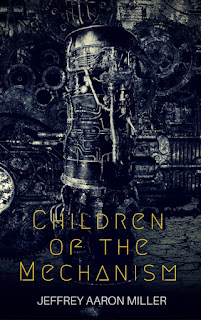
It's one of the bleakest things I've written, set in one of the more evocative settings--a sprawling, windowless factory filled with massive oily machines. Picture it. Smell the grease and the warm metal and the mysterious grimy filth. Within the factory, there are hundreds, possibly thousands, of rooms, most of them sealed behind locked doors. And within these rooms, you'll find the saddest child slaves you've ever imagined, rag-draped Dickensian wretches doing endless menial tasks day after day. 

Cruel robots called Watchers guard them, punish them when they fail to work, and feed them hideous gray food bricks once a day. Doesn't that sound uplifting? I actually think it is one of the more uplifting things I've written.

The book introduces us to four main characters.

Bik, a mostly hairless, tiny thing in the filthiest scrap of a robe you've ever seen. He spends his days polishing mysterious purple rocks using a harsh chemical polish.

Hen, an emotionally disconnected girl who does her best to avoid personal interaction, she spends her days climbing up and down a towering contraption called the Mechanism, like a little bug.

Ekir, a bent-backed boy, much abused by an older supervisor named Ous, he spends his days preparing and serving meals on a nice table in a lush dining room and then cleaning up afterward when nobody eats the food. Nobody ever eats the food.

Kuo, a damaged and possibly disturbed young man who spends his days climbing up and own the enormous fat folds of a headless monster called the Grong, feeding it meat paste from a bucket. He might be losing his mind.

These four eventually cross paths and descend into the bowels of the factory, uncovering secrets and horrors beyond description.

If you've never read the book, let me encourage you to do so. 

For a deeper look at the meaning behind the story, check out this luscious article!

To check out the book, click on the book cover above.


Sunday, April 9, 2017

Embrace the Sadness

I am of the opinion that the best and most effective stories need a few truly sad moments. I don't mean the dainty kind of sadness with a sigh and a single tear. What I'm talking about is a soul-crushing moment of hopeless despair, where we peer into the void. Work a few of those into your story, and people won't soon forget the experience of reading it.

For example, there's the testimony of the ghost from The Vale of Ghosts:

“It happens to all of us. As time passes, everything we ever knew or saw or heard, every person we ever touched or loved, they all drop away, leaving us with nothing but the vague and choking need to escape.”

That's not nearly the saddest moment in the book. Of course, what affects the writer deepest might not affect readers in the same way. For me personally, as I wrote the thing, the saddest moment comes in the basement of a cathedral in Tilieth. Not to give too much away, but it involves our protagonist making an emotional confession.

The bleakest thing I ever wrote is Children of the Mechanism. It's got a few of those horrible, hopeless moments, along with some truly wretched, miserable little characters who suffer far more than they deserve to.

The sad moments start early on. I'd be curious to know which bleak moment of despair hits readers the hardest. For me as the writer, it involved the character of Hen and her tragic interactions with a girl named Tag. And this thought:

I told you to wait, one thought resounding over and over. I told you to wait.

Actually, there's possibly a sadder moment, and it involves a character saying this:

“You were so brave and so strong. I have to do something now, Bik, and don’t you follow me.”

So what is your opinion on sad scenes? Do you enjoy a story with some truly heart-rending bleak moments? What are some scenes from various novels that have deeply affected you?


By the way, the paperback giveaway is still going on! Check out the previous blog entry for details.

Sunday, April 2, 2017

One Million Beautiful Quotes (and Giveaway)

I love reading individual, isolated quotes from novels, especially when it's a good, strange, or thought-provoking quote that piques my interest. I like to try to imagine how it fits into the overall story. I guess that's why I keep doing these quote posts from my novels. Maybe nobody finds it as interesting at me.

Anyway, I've done enough of these that I thought it might be interesting to collate them all into one mega-post.  Also, click on the pictures for more info about the books.

GIVEAWAY: I've got a few paperback copies of my books to give away. Respond with your favorite quote from this list, and I'll put you in the drawing. You can respond on the blog, on Facebook, LinkedIn or Twitter. If you'd prefer a Kindle copy instead of paperback, let me know. Books will be given away in a couple of weeks (4/15/17).

Mary of the Aether Series

"I don’t want a boring old world where all anyone ever does is grow up and work some awful job for no money and spend Friday evenings watching high school football games and recalling the so-called glory days until they die."

"Nobody really believes in anything. My parents don’t believe in anything. They just breathe and eat and work."

"I don’t want sympathy. Sympathy only makes me mad."

"Maybe if I practice a lot, if I order my thoughts, I can learn to imagine better things. Maybe in time I could imagine anything. What if nothing is impossible?"

"The world just got a whole lot more dangerous tonight. Maybe it always was dangerous, but I didn’t know it."

"I know who I want to be. I want to help and heal, and I won’t let you or anyone else try to change me. I saw what I can become, I saw it, right there by the side of the road."

"I don’t care if anyone likes me, as long as I’m not embarrassed ever again by my own feelings or my own behavior."

“I never want an explanation for any of this. Never. I don’t know what you did. I don’t care what you did. The whole world has gone crazy, and I don’t want to know anything."

"I’ve been selfish. I see that now. I wanted a happy little life, but I was entrusted with this power by people who loved me. I’ve wasted so much time whining when I should have been learning."

"The world will burn out like a torch, but the light will shine brightly, and I will rise like the brightest ember into the stars at the end."

"The world is sliding into oblivion, devoured by shadow, and you are its last light."


Shadows of Tockland

"Destiny, I want to lick your face for all your perfect ways.”

"Mark my words, the ever-night is coming, and when it does, you'll be glad you've got some wild nutters at your side."

"Destiny has a funny way of making things irrelevant. Superior numbers, for example.”

"Far away, far away, blessed one. The ever-night is coming. It is coming forever."

"Tonight is a night you’ll wish you had a gun.”

"Sometimes, rubes don’t think they got their money’s worth, and they try to take it out of us in blood."

"Look, we’re committed to destiny now. From this point on, whatever happens, happens. That’s how destiny works."


Children of the Mechanism

"Open doors are the best thing in the whole world. An open door means you can leave something bad and maybe find something good."

"If you hold on, we will live. If you let go, we will go down, down, down. Do you understand how important it is for you to hold on?"

"I was born climbing the Mechanism. Nobody ever told me why.”

"Where I come from, the higher you go on the Mechanism, the more dangerous it gets. The circles get smaller, and the fall is farther. The world is like that, isn’t it? The higher we go, the stranger, the smaller, the uglier, the more dangerous."

"I walked forever down a hundred different places and saw all kinds of different lights and Watchers with hands, and then I came to the end."

"The world got worse and worse the more she understood about it."


Garden of Dust and Thorns

"The very thing that you took for granted will be your salvation. Never forget it."

"You’ve lived in the shadow of this Garden all your life. And you had no idea what was here. None of you did, not even the caretakers. This will be to our everlasting shame. While we lived outside the wall in the dirt, we had everything we could ever need in here.”

"Persistence is not a virtue. It is a defect."

“Stand on your island, in the shadow of your sacred tree, and watch me defile this ground. And weep, if you will, knowing that your thief-lord’s reign is at an end.”

"It’s a very strange thing to be deceived. A very strange thing."


The Archaust Saga (The Vale of Ghosts)

"Why is it every decision I make seems right one second before I make it and then completely wrong and ridiculous one second after I’ve made it?"

"You crossed the relic wall. The ghosts can see you now, and they will—they will drag you down into the vale, sooner or later. They do not give up."

"As time passes, everything we ever knew or saw or heard, every person we ever touched or loved, they all drop away, leaving us with nothing but the vague and choking need to escape."

"Are we smarter than the generations that came before us? How can we expect to fix a problem that they could not?"

"Our worst mistakes can become the catalyst for our greatest accomplishments, if we are willing to make it so."

“There’s not a worse person in the world than someone who will abandon a friend or family member in their last days.”


Dreams in the Void

"Your comfortable life is paid for with the taxes of hard working villagers, so that one day, you might provide just leadership for them.”

"Until a few weeks ago, I thought the world was normal. Then it all came crashing down, and I learned everyone is sick—depraved and sick."

"It’s a miserable thing to be helpful—to be needed, to be essential—and someone can’t see it."

"There is a heaviness in me now, like something coiled around my intestines. I hope to make it go away. I don’t want to feel like this anymore. I don’t want to be the person I have become."

"Sit and ponder, boy. Dream of killing kings."

"And so it comes down to a simple question, young Dekembri. Are we the righteous, or are we the wicked?"

“A storm is coming to sweep away everything. Find a secret place, bury yourselves inside and wait it out. Wait it out.”


Fading Man

"You cannot bury sickness under the ground and expect it to stay there. It will make itself known eventually. It will climb up out of its hole and demand to be seen."

"Nature or fate or destiny has selected us for suffering, and we are to endure it, accept it, take and gorge ourselves on misery like the dutiful sub-creatures that we are."

Tuesday, February 28, 2017

But What Are The People Reading?

Let me preface this by saying, I am by no means even a modestly successful author. However, having said that, the truth is I've churned out a ludicrous number of novels in the last four years. Just take a look at my website to get an idea. As far as sales go, I'm not real good at promotion and marketing, so I could certainly be doing better.

Having said all that, a few of my novels have consistent sales. That is to say, they sell a few copies every week. My other novels have sort of faded into the wastes of time, even my first YA series, which did fairly well regionally back in the day.

So what are the novels that keep selling? Here they are, in no particular order. These are the novels that I continue to sell on a regular basis:

Shadows of Tockland
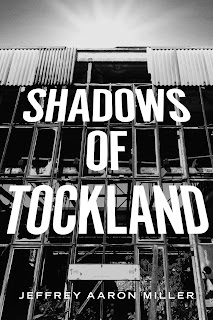
A novel about a kid running away from home to join a clown troupe in a post-apocalyptic version of Northwest Arkansas that is overrun by plague-ridden lunatics and being conquered by a tyrannical overlord. What more could you possibly want in a novel?

Children of the Mechanism
If you like your science fiction drenched in bleak despair and wretchedness, this is the one for you. Rag-draped child slaves live and work in a massive factory, tormented by cruel robots called Watchers. This one's a real "pick me up." Enjoy. Ultimately, I believe it's fairly uplifting.

The Vale of Ghosts 
(and, to a lesser extent, its sequels)
The first volume of a paranormal fantasy series that is alternately creepy, gross, and strange. I suppose that's a vague description. Let's just say, it involves ghosts, weird underground creatures, hideous surgeries, and powerful magic.

Every once in a while, I sell a copy of something else (say, Dreams in the Void), but that's about it. So, if you're looking to read something I've written, I suppose one of the three listed above would be the place to start. At least until The Figment Tree comes out and takes over the world. See how I inject optimism into the conversation at the very end?

Thursday, October 27, 2016

Context Free Quotes

So I've been attempting to do a Quote of the Day on Twitter. Basically, I find one interesting or unusual quote from one of my many novels and post it each day. I thought it might be interesting to see what those quotes look like stripped of their context and source. Without knowing anything else, what do these quotes make you think of?

"One dumb act made in ignorance is all it takes to ruin your life forever."

"Look, we’re committed to destiny now. From this point on, whatever happens, happens. That’s how destiny works."

"The world got worse and worse the more she understood about it."

"It’s a very strange thing to be deceived. A very strange thing."

"I thought the world was normal. Then it all came crashing down, and I learned everyone is depraved and sick."

"The world is sliding into oblivion, devoured by shadow, and you are its last light."

"Our worst mistakes can become the catalyst for our greatest accomplishments, if we are willing to make it so."

"Are we smarter than the generations that came before us? How can we expect to fix a problem that they could not?"

"I walked forever down a hundred different places and saw all kinds of different lights and Watchers with hands, and then I came to the end."

"As she became a part of every single living thing, she realized that every single thing was, in some strange way, reaching out to her, crying to her for purpose, for life, for breath."

"Nature or fate or destiny has selected us for suffering, and we are to endure it, accept it, take and gorge ourselves on misery like the dutiful sub-creatures that we are."

"Nobody really believes in anything. My parents don’t believe in anything. They just breathe and eat and work."

"Tonight is a night you’ll wish you had a gun.”

"My father used to talk about water dreams when I was a little girl, but he said they were rare, and when you had one, it meant someone close to you was going to die."

“This is not death. What new thing is this moving through my body?”

“A storm is coming to sweep away everything. Find a secret place, bury yourselves inside and wait it out. Wait it out.”

"As time passes, everything we ever knew or saw or heard, every person we ever touched or loved, they all drop away, leaving us with nothing but the vague and choking need to escape."

Which of these quotes stands on its own?

To follow the Quote of the Day, head over to my Twitter account: https://twitter.com/jeffaaronmiller

Thursday, June 16, 2016

Creepy Places with Strange Odors and Slimy Walls

Okay, confession time. World building is not my strength. You know what I mean by world building? The term refers to the author's process of constructing or fleshing out the overall structure (political, geographical, cultural) of their imaginary world. It's a big deal particularly for science fiction and fantasy writers. Good world building gives readers a strong sense of a believable imaginary world outside the confines of the immediate plot.

I don't enjoy it so much. It probably shows. My devotion tends to be toward characters and events, mood and tone, but I do very much enjoy creating memorable settings. These, of course, can contribute to world building, but in fact, they operate much like the setting of a play or a scene in a movie. They place the readers in a distinct location and give them a stage on which to locate the characters and keep track of the action.

Boy, do I love to create a memorable setting, something that readers can feel and smell, something that gives a distinct impression, something they will remember. I don't know how good I am at it, but I enjoy it. So with that in mind, let's look at some of my favorite settings from some of my novels. These are places I loved to create, places that were vivid in my imagination. If you've read the books, which of these stick out in your memory?


Children of the Mechanism - Grong Room

One might say that this whole novel is set in a memorable place. It's a vast, dark, grungy factory full of slimy refuse holes with dented robots roaming about. It's labyrinthine and smells bad, and it's full of danger. But, one place in particular that I enjoyed writing about was the Grong Room. This is the place where a character named Kuo lives and works. It is a vast, high-ceilinged place with a rubbery floor on which a hideous, huge flesh-creature rests. The Grong is a headless, limbless, living bio-mass of some kind that absorbs a nutrient-rich "meat paste" which workers spend all day slopping under its massive skin folds. Doesn't that sound fun? It's hideous, odorous, dark, and disgusting.


Mary of the Aether - Chesset

Chesset is a small, fictional town set in rural Arkansas that has a lot of qualities that I have experienced in real places. If you know the area of Northwest Arkansas, you will see pieces of Mountainburg, West Fork, Winslow, and Chester. The only two businesses in town, at least initially, are a small convenience store and one of those ubiquitous soft-serve ice cream parlors that small towns love. Everything revolves around these two places, until a big gas station sets up shop just off the highway. Chesset feels like a real place to me. It is very much like towns where I have actually lived.


Garden of Dust and Thorns - The Garden

The garden in this novel is the last green place in a world that has otherwise transformed into one vast, dusty desert. Since it was created to preserve plant and animal species, it is a unique sort of place where things from many different kinds of environments and climates all exist side by side. Baobab trees next to stately aspen, bison grazing with camels, and a magical power somehow allows all of these things to thrive together. If such a place existed, it would be quite a thing to see. Every kind of fruit, every color of flower, it's all there. A massive wall of thorny vines surrounds it and keeps out the dust. The tragedy of the story is that the people who live outside the garden take it for granted. Some never go inside. They are content to live in their sad little town on the other side of the wall.


The Vale of Ghosts - The Archaust Chamber

This place appears in the first two books of The Archaust Saga. Actually, it appears in the second volume, Army of the Inner Eye, quite a bit more. It is partly a natural cavern and partly a constructed chamber. Primary access is through a hole in the roof, which drops into a deep, muddy pool. But the real heart of the Archaust chamber is behind an ancient door, where a narrow passageway leads into a secret room. It's dim, dark, oppressive, and hopefully super creepy. And it is here that our curious protagonist first comes face to face with the real evil that threatens the kingdom.


Teth of the City - The City

A sprawling futuristic city, full of massive metal buildings, countless balconies, winding streets, sleek vehicles, and thousands of neat little workstations and living quarters for all the people. That's the setting of my next novel. A place for every person, and a person for every place. That's the motto. But if you look a little closer, you will find seedy places, rundown and desolate locations, street dwellers, and mysterious entrances into underground corridors. It's overrun, busy, noisy, and a bright red sun burns through the constant haze in the sky overhead.


Anyway, those are just a few examples of some of the memorable settings I've enjoyed writing about over the years. I love to create a vivid sense of place, where readers can practically feel the grime and smell the odors. Hopefully, I have occasionally managed it.


Sunday, May 29, 2016

Every Story Needs a Weirdo

I can't help myself. In just about every novel I've ever written there is at least one character who is a flat-out weirdo. Sometimes they are just quirky, other times they are psychologically damaged, and a few of these people are totally insane. It's not something I set out to do. It's just something that happens. I try to make interesting characters, and since I tend to be a little weird myself, it bleeds over.

So let's look at a few examples of my weird characters. If you've read these books, I'd be curious to know which of them you liked the best.

Shadows of Tockland

All of the characters in this story are weird or damaged in some way, but nobody matches Cakey the Clown, AKA Gavril Tugurlan. He performs a knife juggling act in The Klown Kroo, a traveling circus. That's not what makes him weird. What makes him weird is that he never takes off his clown makeup, I mean never, and he occasionally utters prophetic pronouncements about an impending apocalyptic event called the ever-night. He believes in destiny to a fault, and he's quick to violence. At the same time, he can be extremely loyal.

As he tells our anxious protagonist, "Mark my words, the ever-night is coming, and when it does, you'll be glad you've got some wild nutters at your side." And, boy oh boy, does that turn out to be true.

Children of the Mechanism

The characters in this book are all enslaved children, so they have stunted developments and strange ways of talking. However, the weirdest of these poor kids is an unfortunate guy by the name of Kuo. In this case, Kuo is most likely suffering from an actual mental illness, some form of schizophrenia, so his behavior is more sad than amusing. He keeps seeing an old friend of his, another slave named Rel, who might or might not actually exist. Poor suffering Kuo unwittingly does some really awful things to some innocent people, but later on, the same mental confusion actually compels him to heroism. In a way, he turns out to be the most important character in the story.

Teth of the City

This book isn't published yet, but just you wait until you meet Kide. He's a short, smart, gifted guy with a huge, hideous beard, and an impressive gut. He's someone our characters turn to when they need access to hidden files in a computer database. But Kide is a hoarder, with an apartment stacked to the ceiling with "stuff," and he's sarcastic and self-amused. Plus, he loves to call people buddy and pal and dearest. A nice combination of traits, yes?

Mary of the Aether

There are a few rather strange people in this book series. Kristen Grossman, for example, who is sarcastic, occasionally insulting, sometimes insufferable. In the second book, Mary of Shadows, we learn that this might be the result of some family turmoil she has experienced. However, the weirdest character is a fellow named Richard "Mullet" Williams. He's sweaty and awkward, and when readers first meet him, he is in the school bathroom, pretending to have diarrhea so the school nurse will send him home. The nickname comes from the long sheet of glorious, greasy hair that spills down his back. He also almost gets everyone killed, so that's a problem.

Anyway, those are just a few examples. Yes, I do enjoy creating weird characters, and I create them often. Some are only mildly strange, like timid Elonny from The Vale of Ghosts or Innpan from Garden of Dust and Thorns, others are dangerous nutjobs, like Cakey. I enjoy writing them. I hope people enjoy reading about them.

You can learn more about these various books right HERE, people, HERE! Click it! CLICK IT NOW!

Thanks :)

Friday, May 6, 2016

What Am I Trying to Say?

When I write a novel, I am, first and foremost, just trying to tell a compelling story, with interesting characters, thrilling events, and a memorable setting. Sometimes, there is also a bit of cathartic saturation, where I am wallowing in a particular mood or emotion. However, there is almost always a singular thematic idea that I am chasing as well.

With each of my novels, I can simplify that thematic idea down to its most basic essence. Here are a few examples:

The Vale of Ghosts

Annella Fenn, the main character, addresses the singular theme in this way:

Isn’t it strange how everything can fall apart in one day? In one moment?” Ann said, musing into the growing darkness. “One dumb act made in ignorance is all it takes to ruin your life forever. It shouldn’t be that way. There should be some way to go back and undo choices made, especially choices made unwittingly. Don’t you think?”


Army of the Inner Eye

The sequel to The Vale of Ghosts offers a natural thematic progression from the first book, which Annella also summarizes with this statement:

“Every time I try to fix a situation I make a big old mess.”

So it's easy to make a big old mess and incredibly hard to fix it. And that is what this book series explores, chiefly, and that is how it goes sometimes in life, folks.


Shadows of Tockland

A strange, violent novel about a clown troupe traveling across a post-apocalyptic America. Shadows of Tockland tells the story of a young man named David Morr who runs away from home to join up with the clowns. As he meets the performers, he finds that each one is strange in his or her own way. However, what they all have in common is an obsession with performing, despite the perils and tragedies they encounter on the road. 

Bubbles the Clown, as she is called, sums it up nicely in this bit of conversation with David:

“I like to perform. Better to say I need to perform. It feels good when you get applause. It’s good when you get recognition. It feels right when you’re on the stage, and you can feel it all coming together. You know what I mean?” 

He shrugged. 

“No, I guess you don’t get it yet,” she said. “But you will. There’s something in performing that we all need, and it makes the awful stuff seem worthwhile. Even Gooty sticks around, and he’s got the least reason to be here. All of us need something that we only get from doing this. That includes you. There’s some reason you wanted to join up. What was it? Your old man?” 

David nodded. “Mostly. Had to get out of Mountainburg.” 

“So we’ve all got our reasons,” she said. “And that’s why, if you’re like the rest of us, you’ll keep right on letting Telly be the boss, even when his decisions get you in trouble. Because you need to be here, you need to be on the road, you need to be onstage despite the risks and the pain.”


Children of the Mechanism

A truly dark tale about child slaves living and working in a massive factory, watched over by cruel robots. When a glitch in the computer system causes some of the doors to open, a few brave children leave their rooms and begin to wander the corridors. And really, that's kind of the point right there. When a door opens, you have to have the courage to go through it. As Ekir says:

"Open doors are the best thing in the whole world. An open door means you can leave something bad and maybe find something good."

Despite this, only a handful of slaves are willing to risk the uncertainty of the open door, choosing to remain in the misery they are familiar with rather than trust themselves to fate.


Anyway, that's just a few of my books, but you get the idea. Maybe we'll examine some others at a later date. Chasing a singular theme, an idea, a cathartic saturation in a particular mood or emotion, those are the kinds of things I'm doing when I write a novel.

At the moment, I'm working on a new science fiction novel called Teth of the City. It's what you might call dystopian, and it has a similar feel to Children of the Mechanism, though it's not nearly as dark. In the end, Teth of the City is about learning to care again, learning to give a crap after years spent nursing old wounds. I think it might just be powerful stuff, but we shall see. More on that one later, folks.

(By the way, click on any of the book covers in this blog entry to go to the appropriate Amazon page for the book)

Tuesday, January 19, 2016

The Beautiful First Appearances of Fabulous Villains

What makes a good villain? I suppose some people like an antagonist who is just pure evil, who does hideous and despicable things and wields great power. Others prefer a villain whose motives are understandable, who might even be somewhat sympathetic, one whose fall into evil makes sense. That sort of villain typically becomes more of a tragic figure than an incarnation of wickedness.

A villain's first entrance into the story is always significant and, if done right, can make for a memorable moment. That initial glimpse creates an impression that colors the rest of the story for the reader, I believe. Think of Darth Vader striding through the smoky door of the rebel ship in the opening scene of Star Wars: A New Hope. It's a bold and mysterious first appearance (made less impactful now, perhaps, that we've seen the little kid version of pre-Vader shouting "Yippeee!").

Anyway, to that end, here are some excerpts from my novels with the first appearance of the main antagonists. There is no particular deep purpose here in isolating these bits of text except for my own curiosity about how these first appearances feel, what sort of immediate impression they make. So without further ado, let's begin.


Mary of the Aether
Leonard Watt

His first appearance is the opening paragraph of the novel, though readers do not get his name until quite a bit later. I like to think it's a pretty memorable opening.

The lunatic in the long, gray cloak dashed out of the forest and ran right up onto the front yard, waving his arms in front of him like a child playing tag. He skirted the porch, paused, turned a complete circle and fell onto his hands and knees. A hood obscured most of his face, but Mary could see the tip of a pointy chin covered in whiskers. She sat at the living room window, leaning against the sill and resting her forehead against the cold glass, transfixed by the sight. The crazy man crawled through the high, un-mowed grass, his face close to the ground, shifting back and forth like a bloodhound chasing a scent. He stopped at the driveway, lifted his head and appeared to sniff at the air. Then he scooped up a handful of gravel and sifted it through his fingers.


Mary of Shadows
Gavin

Gavin, the primary troublemaker for much of Mary of Shadows, also appears in the opening chapter, interrupting Mary's birthday party in the park with some disturbing behavior. Here is his first actual appearance:

A figure stumbled out of the line of trees, hunched over, a man clutching his face. He wandered into the park, past the swing set and monkey bars, past wide-eyed children and a pair of corgi dogs on leashes who couldn’t decide whether to bark or whimper. The man’s eyes were covered, but he stumbled right toward the picnic table, as if seeing it in his mind....a trail of blood seeped out from under the man’s right hand and ran down his cheek. He had on a pale blue, button-up dress shirt, but the tail was un-tucked, and the breast pocket was torn and hung down like a bit of rent skin.


Mary of Starlight
Ronald Holt

Some of the same evil characters recur in this third volume of the series, but about halfway through, we do meet a significant new villain in the strange Ronald Holt. Here is his first appearance in this book:

“I surely hate getting bad news. I surely do. Anybody would.”


At first, Aiden thought it was Perry who had spoken and started to brush him off again, but then he realized the voice had come from his left side. A gruff voice, low and coarse. He turned and saw a man walking along beside him, ten yards away, keeping pace as he picked his way around the trees. Aiden had seen the man before, and he had expected to see him again but not so soon, not so suddenly. The man had a long white beard, black around his mouth, unkempt at the edges. It hung down to his chest. He wore a ragged fedora hat pulled low over his eyes and a long brown trench coat.


“It’s about the magical girl, I suppose,” the man said. “All of the bad news is about her these days, isn’t it?”


Children of the Mechanism
Watcher

There isn't really a single villain in Children of the Mechanism. Well, I suppose the factory itself counts as the primary antagonist, but the cruel Watcher robots serve as the primary source of danger for the main characters. Here is their first description in the early pages of the novel:

The Watcher entered the Sleeping Room through the archway, returning from whatever strange errand it had been about, and stopped in a corner near the Refuse Hole. A boy relieving himself finished quickly and dashed away. The Watcher had a shiny, cylindrical body, fat wheels for feet, a flat, circular head with dead eyes, but it was the arms that the boys paid special attention to, long segmented arms made of polished metal rods with cloth bulbs for hands. Those were the killing hands, and they were ever poised, ready to strike.

“One minute until work,” the Watcher said. “One minute.”


Dreams in the Void
Lord-General Durehen Tallek

His first appearance happens in the first chapter, even though his real purpose is not made clear to the protagonist until a few chapters later. But here is that first appearance:

Six men passed, and then one appeared, riding alone, who seemed greater than the others. He wore the same sort of armor, polished to a mirror shine, but massive silver wings curled out on either side of his helm above the cheek plates, and he had a double visor, the first raised all the way up, the second lifted halfway, revealing a set of dark eyes beneath a heavy brow. A man and not an empty suit. His long cloak was fringed in gold cloth, and he had drawn it around himself, clutching a fold of it in his gloved left hand.


Garden of Dust and Thorns
Magesh

The first real appearance of Magesh happens after the protagonist is captured and brought into a courtyard with some of her people. After waiting for a while in anxious silence, Magesh appears:

After some time, there arose a strange jingling sound from outside the courtyard, as if many chains were being shaken. She heard soldiers chanting that same word, the one that sounded like death, but in hushed voices. Finally, a pair of soldiers entered the courtyard, bearing a padded bench stolen from someone’s house. They set it in the open space at the center of the courtyard, then took up positions on either side of it. 


A man entered, markedly different from the others. He had no hood, only a long gray cape fringed in silver brocade. On his head was a kind of crown made of woven strips of leather, alternating red and black. His face, unlike the others, was uncovered, a hard face, features chiseled out of stone, framed by short curls of graying hair. He crossed the courtyard in four long strides, as the prisoners along the walls murmured and groaned, turned in one swift motion and sat down on the bench. He had a small curved sword sheathed at his side, but he drew it now and laid the blade across his thigh. 


“Bring him,” he said, after a moment. Dark eyes beneath bushy eyebrows, a sharp nose, flaring nostrils, thin lips, deep creases at the corners of his mouth and along his forehead.


Vale of Ghosts
Vyshe

Now, this situation is somewhat unique in that the true villain of this whole fantasy series doesn't appear until fairly late in the first book. Prior to that moment, the protagonist has no idea what she's dealing with. In fact, when he first appears, she mistakes him for a statue:

And sitting on the bench was some bent-backed old statue, gray and mottled skin like polished marble. Someone had draped it in a filthy robe that was falling apart. It was the figure of a man with well-defined muscles, its face hidden in its hands.

But then it reveals itself to be a living thing:

Suddenly, the statue moved. First, it shuddered, as if waking. Then it sat up. She saw an angular face, delicately carved. The lips parted to reveal rows of pale teeth, and the eyelids opened to reveal hollow spaces where eyes should have been. But when the statue turned toward them, she realized the hollow spaces were not empty. Tiny specks of light flashed deep inside, pinprick lights like distant stars.

And, of course, from that point on, things get markedly worse for all involved.


There are many more--General Mattock from Shadows of Tockland. Devourers from the Mary of the Aether series. Sindaya from Garden of Dust and Thorns. The Master from Children of the Mechanism--along with a few that I can't name because they are revealed during major plot twists.

So what do you think? What makes a memorable antagonist? What makes a memorable first appearance for a story's villain?