Friday, August 12, 2022

Sadly Neglected Forever

Between 2009 and 2018, I was on a mad tear, writing books and short stories like a man with nothing better to do. I churned out a whole bunch of novels, some of which were published by indie publishers and others self-published. I put out seventeen novels in total, but only a few of them received any real marketing or attention.

How many copies of my books did people ultimately acquire? When factoring in Amazon and other online booksellers, indie bookstores, school libraries, personal sales, and social media giveaways, ultimately slightly less than 10,000 copies. However, most of those were from just a handful of my books, namely: Mary of the Aether, Children of the Mechanism, Shadows of Tockland, The Vale of Ghostsand Garden of Dust and Thorns

In retrospect, I wrote too many books. I should have written fewer books and put more of my effort toward marketing them. 

Anyway, in 2017, I began a ghostwriting career, which has proved lucrative and took all of my focus off my own novels. Over the last few years, I've done a lot of writing for other people, including some pseudonymous fiction writing for a UK publisher. Ironically, some of the novels I've written under a pen name have sold very well, much better than my own books.

In recent months, I've begun digging up my own novels, when I can find the time, and trying to reread them with an eye toward making something meaningful out of them. Most of them are just sitting in various online stores, making very sporadic sales. I don't know if there's anything I can do with them at this point, really, and I certainly don't need the sales. Ghostwriting pays the bills.

If I had to pick just a few to focus renewed energy on, I think I would go with the following:


And if I had a lot of free time, I might give some time, consideration, additional editing, and attention to:


So, what do you think, Dear Reader? Have you read any of these novels, and are there any that I should stop sadly neglecting forever? 

Monday, December 10, 2018

There's a Lot More Creepiness Below

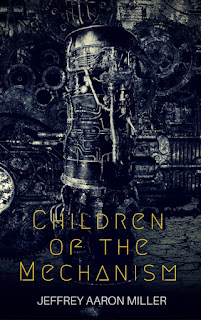
Have you read Children of the Mechanism? It seems to be one of my more consistently read and appreciated novels. When I created the weird, dark factory world of the novel, there was a lot I thought about but didn't have a reason to delve into during the story. There's some very strange stuff going on throughout that mysterious factory.

Well, I'm slowly working my way through the sequel. It doesn't even have a title yet. It's just called Children of the Mechanism 2, and I'm going rather slow because I have another full-time job that gets in the way. However, I've churned out five solid chapters. Maybe you'd like to read the rough opening paragraphs? Okay, why not? Here you go:

Children of the Mechanism 2
Chapter One: The Bones Under the Bed

“Never open that door,” the old father said, tipped to one side on his chair, the loose skin of his jowls quivering as he struggled to sit up. “Never open that door, Gis, not for any reason, not for anything in the world.”

The incessant, rhythmic tapping from the end of the hall continued unabated, every metallic clank climbing Gis’s spine and settling at the base of his skull until he could scarcely stand it. The sound had begun in the middle of lunch and continued now long after he’d tossed the residue of the old father’s food into the Refuse Hole. Would it never end?

“But, Father, who is doing this?” Gis asked. “Who is making the terrible sound?”

The old father finally managed to sit up, flopping back against the high headrest of the chair. With a shaky hand, he pushed his wispy white hair back against his skull. His robe hung loosely these days, like a big blanket draped over his shoulders. Gis was tempted to believe the old father changed clothes at night while the children slept, gradually putting on bigger and bigger robes, but he knew this wasn’t the case. The ancient food stains on the front of the robe were the same as ever, years of dribbled meat juice soaking into the gray fabric.

“Listen to me carefully, Gis,” the old father said, dragging his bent fingers through the wild spray of his white beard. “There is something very dangerous on the other side of that door. That’s why we never open it. That’s why we never even touch it.”

“But, Father, you told me the door can’t open,” Gis said, lingering in the entryway of the old father’s bedroom, idly dragging his heel against the smooth carpet. “You said it’s not a real door. You said it many times.”

“I’m just trying to keep you away from it, Gis. I will say whatever I must say to keep you away from it.”

The tapping stopped for a moment, and Gis breathed a sigh of relief. It was like the sudden end of a long nightmare. But then it started up a moment later, and all of his nerves were immediately on edge. He wanted to claw at something, to dig into his own skin, to bite the carpet, or break one of the old father’s dainties on the shelves. 

Tap-tap-tap, like metal against metal. Gis couldn’t stand it. He hated it more than he’d hated anything since the Many Deaths.

“But what if this sound never stops?” he said. “How will we…?” How will I not go crazy? How will I not pull the rest of my teeth out and throw myself into the Refuse Hole?

+ + +

There you go. One of these days, the sequel will be ready. In the meantime, if you haven't read the original, check it out by clicking the image: 


Tuesday, August 28, 2018

Before Mary Was Novelized

Before I wrote my first novel Mary of the Aether, I wrote a short story version of it. That short story was purchased for a Young Adult anthology, but the anthology never made it to print. I'm not sure what went wrong, but the short story just languished in limbo, and eventually, the idea evolved and became my first novel.

You can read that original short story on Futurism. If you've read the novel, you'll notice some distinct differences. 


There is one line in the short story that I wish I'd included in the novel series somewhere. It's something Mary says to her bullying friend:

“Someday, when you’re no longer a child, you’ll understand what you’re saying,” Mindy said. “Someday you’ll understand who you’re talking to. Someday. For now, it’s alright. I understand, and I don’t hold it against you.”


Wednesday, June 13, 2018

Mary Is Back Again for the First Time

My four-book Mary of the Aether series has had such a long, strange publication history, it's amazing that anyone has been able to find and read it. I wrote the first draft of the first book way back in 2009. In fact, I wrote it so long ago that it was actually technologically outdated. The characters were using flip phones. I mean, other than drug dealers, who uses a flip phone in 2018?

I sold the first book to an indie publisher called Whiskey Creek Press in 2011 and it hit the market in July 2012. Getting that first big box of books was a great feeling, even if I was concerned about the low-quality paper that caused the paperbacks to crumble into oblivion after the very first reading. In the summer if 2013, Mary of the Aether was included on a recommended reading list for Arkansas teachers and received a bunch of free publicity at a regional common core workshop. This resulted in me doing a bunch of creative writing workshops and book readings at schools and libraries.


In the meantime, I churned my way through the entire series, writing three sequels and bringing the series to a dramatic conclusion with Mary of Cosmos. Just as the fourth book reached its publication date, Whiskey Creek Press announced that they were folding up shop and selling their catalog to a company called Start Media. Only select authors were offered contracts by Start, myself included. I made a whopping $200 on the deal. Fortunately, I invested that $200 in an exciting multilevel marketing opportunity and it paid for my fleet of tricked-out Honda Accords.

Just kidding. I did take the $200, as did many (but not all) authors from Whiskey Creek Press. Then the awful silence of God descended upon the earth. Start Media acquired the catalog of books, put out their own versions, and that was it. They didn't do much in the way of publicity. Oddly, they actually introduced some formatting problems to Mary of the Aether, which already had a few typos and formatting problems from Whiskey Creek Press.

Fun times.


Eventually, things got a little bit exciting. Simon & Schuster, the big-time publishing house, bought Start Publishing, which meant my Mary of the Aether series was available on the Simon & Schuster website (ebook only). This should have been a big deal, but sales were as close to negligible as possible without being nil. Also, there was this weird thing that happened where the first three books of my series were listed on one webpage (out of order) while the fourth book was listed on a different webpage. Despite numerous emails, I was never able to get anyone at Simon & Schuster to fix this problem.

Funner times.

This year, I finally reacquired the rights to the whole darn series and decided to self-publish. This gave me a chance to go back through the manuscripts and tidy things up a bit. I corrected the typos and formatting problems introduced back in the day. I streamlined some clunky prose in a few places, added a few small scenes that I felt were lacking, and turned those outdated flip phones into modern smartphones.

Ironically, self-publishing is probably the best thing that has ever happened to the series. Sales for the new and improved self-published version of Mary of Aether are better than they have been in years. The first volume, in particular, is on its way to becoming my second most consistent seller, after Children of the Mechanism.

Things are looking up for good ol' Mary Lanham and her buddies the Devourers.

After finishing her work on Mary of Cosmos, my first editor raved about the series. In one of her final emails to me, she wrote the following:

I have to tell you, I have LOVED working on this series. It is one of my absolute favorites! I could definitely see this series doing well if it just catches on like it should!


Other than the initial interest back in the summer of 2013, maybe it finally has a real chance. People are reading it. If you haven't given the series a chance, let me entice you to do so now with the following review comments for the series:

"Jeffery Aaron Miller once again uses his unique knack for writing about other worlds to draw you in and to have you totally engaged in the story. Jeffery is a wonderful writer who can take you to a fantasy world yet still keep you in touch with the real world and its own conflicts. Mr. Miller just has the knack or ability to create these other worlds that are mixed with our own world, and yet the issues of growing up in this world, poverty, and unpopularity, are intertwined with the lofty goals of the other world. There is so much in his storytelling to admire and to recognize for the youth of today. I find his writing and storytelling abilities to be fascinating.   


"I found this book to be absolutely brilliant! After the first couple of pages it really picked up, and I could hardly put the book down as I felt like I, myself, was in the book alongside Mary!"  


"The story was fresh, the plot nicely paced, and the characters unforgettable!


Okay, ladies and gentlemen, now's your chance to check out the series. Will it be among the best experiences you've ever had in your entire life? I can't say for sure, but why don't we find out? Here is everything you've been waiting for. 


Friday, February 2, 2018

A Sequel to Shadows of Tockland

Yes, I am slowly creating the sequel to Shadows of Tockland. I say slowly because I am super busy at my real job, but occasionally I find time to whittle away at the story. I've written roughly 127 pages of the first draft. I shouldn't give anything away at this point. Suffice it to say, the story finds our intrepid Klown Kroo getting up to some dangerous shenanigans, thanks in large part to the ridiculous behavior of two specific members of the troupe.

Is that vague enough? Perhaps the opening paragraph will wet your whistle. Here it is:

David Morr brushed aside the tiniest curtains in the world, gazed through a window covered in muddy handprints, and saw a naked, pink monster writhing on an orange wool rug. He watched as the nameless animal clawed at its own belly and chest, a glistening tongue poking out from between generous lips to lap at the air. David grunted in disgust and let the curtains fall back into place, but still he saw it in his mind’s eye, all that yardage of hairless skin, the great heaps and mounds of it, distorted into abstract shapes like melting mountains. 

There you go. I'll keep plugging away at the novel. In the meantime, if you haven't read the first book, make it happen. If you have read the first book, read something else, like THIS or THIS or THIS.

Thanks!


Jeff


Saturday, June 24, 2017

Having Too Much Fun with Clowns

I've mentioned before that I enjoy creating chapter titles. I see them as opportunities to pique the interest of readers. My latest project is going to have some of the weirdest and most interesting chapter titles I've ever written. What is that new project?

A sequel to Shadows of Tockland, of course.

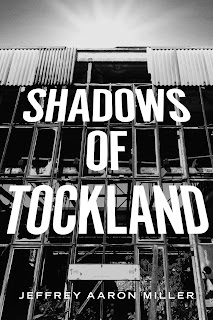
Now, if you've never read Shadows of Tockland, I highly recommend you give it a chance. It's hard to think of another book or movie that bears similarity to it. Let's summarize: in a post-apocalyptic version of Arkansas, a young man runs away from home to join a traveling clown troupe. Along the way, they encounter a city full of plague-ridden maniacs and a rampaging army from an empire called Tockland. It's brutal and strange, and the response has been mostly very positive.

Anyway, I've finally gotten around to writing the sequel, which is tentatively titled The Dust-Lords of Tockland. It takes place on the northern border of Nebraska and the future nation of Lakota. Lots of strange and terrible things happen, building to some interesting revelations. Is that vague enough? Well, let's just say Cakey the Jacked-Up Clown and Disturby Dave get up to some dangerous shenanigans while touring a new town.

On to the chapter titles. I've written the first four chapters, and here are the titles:

Chapter One: The One and Only Tiny Barrel-Shaped Lady
Chapter Two: Motel Memories
Chapter Three: Let’s Please Ruin Our Careers
Chapter Four: Everybody Loves a Clown with a Knife

See what I mean? I'm enjoying writing the novel very much, but I'm really looking forward to creating the chapter titles. This story is going in some weird, weird places, friends.

In the meantime, read the original right now, if you haven't already!


Wednesday, May 31, 2017

Terrorizing Real Places with Clowns and Mayhem

I have a tendency to take real-life locations, particularly places I've lived in or visited, and insert them into my works of fiction. I usually take substantial liberties with these locations, playing with the geography and timeline. I enjoy this perhaps more than I should. Let's take a look at a few real-life locations that I've inserted into my novels and discover the terrible things I've done to them.

-----------------------------------------------------------------------


This novel contains three real cities (all of them located in Northwest Arkansas) but moves them into a post-apocalyptic world and fills them with danger, violence, clowns, and plague. Isn't that nice?

Mountainburg

This small town has inspired locations in two of my novels: Shadows of Tockland and Mary of the Aether. In Shadows, it becomes a steam-powered, gas-lighted town on the edge of civilization. When the novel opens, a small traveling circus has come to town, and that's where our protagonist first meets our clown heroes.

In reality, it's a small, quiet town with a strange dinosaur park. It's also home to the Dairy Dream, which inspired the Dinky Dairy in Mary of the Aether.


West Fork

In Shadows of Tockland, West Fork is a city of strange hat-wearing, plague-ridden hillbillies. In real life, it a town of about 2,000 people that is chiefly known for Riverside Park, where you can dive off bluffs and splash around in the White River.


Fayetteville

In Shadows of Tockland, Fayetteville has been transformed by plague and war into a walled fortress city trying desperately to keep the sickness of the world at bay. The name has been reduced to Fayette, and the people have become hostile to everyone. In real life, Fayetteville is almost certainly the greatest city in Arkansas and is the fifth-best place to live in the U.S. Much of the action in the novel takes place in and around Dickson Street, so when the plague hits, watch out for Dickson Street, people. It's doomed!


-----------------------------------------------------------------------

Bartlesville, Oklahoma

This small Oklahoma town is where I grew up and went to high school. I have strong memories of this place in the years 1987-1991. It has changed a bit since then, with new roads being built and some old businesses disappearing from the face of the earth. The version of it in the novel has had its geography messed with. Tuxedo Trailer Park, the setting of the story, is a fiction. It doesn't really exist, though it is based on a much smaller trailer park where a friend of mine lived. I've also placed a strange alien power in its midst and set it loose to ruin lives, so that's fun.


-----------------------------------------------------------------------


Siliven

Since this is a fantasy novel set in a completely different world, you might be surprised to discover that one of the primary locations in the story is based on a real place that I once visited. Siliven is a smallish town designed and built in a grid, where the north-to-south streets are numbered neatly from One to Ten. In the very center of the town, there's a large open plaza that serves as a meeting place. It's where a lot of significant events occur in the book series, and the dominant building there is the local church.

Believe it or not, Siliven is based on the city of La Plata, Argentina. Although La Plata is vastly larger than Siliven, it's layout is the same general idea. As you can see in the photo below, the streets of La Plata were designed and built in a grid. At the heart of the city, there's a large plaza which is dominated by the Cathedral of La Plata. If you took La Plata and shrunk it down significantly and moved it into a vague fantasy setting, you'd get Siliven.


-----------------------------------------------------------------------

West Fork is the scene is a brutal struggle with plague-ridden hillbillies. Fayetteville (Fayette) is the sight of a fierce gun battle involving a clown troupe, an army, another army, and a mob of maniacs. Bartlesville is invaded by weird ribbon-like creatures that stir up all kinds of evil, grief, and hatred. Siliven (La Plata) is haunted by ghosts and eventually terrorized by a weird cave-dwelling monster.

See how fun it is?


Monday, May 15, 2017

The Nineties Are Calling You

The summer of 1991 in Bartlesville, Oklahoma was a hot and humid one. Nothing unusual about that. Oklahoma gets its share of hot, humid summers, but this particular year was different.

It all started when a young man by the name of Navin Noe hopped over the fence at the back of Tuxedo Trailer Park and made his way into the overgrown wooded area beyond. He only intended to retrieve his prized baseball, the one he caught during a local high school baseball game.

Unfortunately, the woods were overrun with stray dogs and worse. Something was hidden deep in the hollow of a tree, something waiting to be roused. Once awakened, it's power threatened the whole city.

Who are the young people responsible for stirring up all of this trouble? Let's meet them.

Navin Noe

Navin lives in Tuxedo Trailer Park, in the third trailer from the end, in fact. His mother works the graveyard shift for a janitorial service at the local hospital, so Navin's aunt spends nights with him. During the day, Navin's mother spends most of her time sleeping on the couch in the living room, so he's left to roam with little supervision. Unfortunately, there's not much to do in his immediate vicinity.

Hao

Navin's best friend, Hao, actually lives across the street in a real house. His father owns a small restaurant on the east side of town, though it doesn't have the best reputation. Hao has a game room with multiple video game systems, including an old Atari 2600, an NES, a Sega Master System, and a brand-new Super Nintendo. In the eyes of most trailer park residents, Hao's family is rich.

Jane

The newest resident of Tuxedo Trailer Park, Jane arrives with a strong sense of disgruntlement. She had no desire to move into a trailer park and tried to convince her dad to rent an apartment instead. He didn't listen, and she's not at all pleased. Her old hometown, Plano, was far more exciting, and she's not afraid to make comparisons.

Now, meet our fine city. Bartlesville, the City of Lights! Actually, that's Paris, but for those unfamiliar with Bartlesville, here's a glimpse of downtown:


Cool places the kids like to hang out? Well, there's the Eastland Four. That's the "nice" movie theater in town.


There's also the Penn Twin. It's got an interesting retro vibe. Navin doesn't like it when the movies play off-center and out of focus, though.


There's Washington Park Mall, of course. The old folks prefer Luby's. Navin and Hao make the occasional trip to Aladdin's Castle to play video games. Hao is pretty good at Smash TV. There's also Time Warp Comics, but Navin doesn't really have extra money to spend on comics. He borrows X-Force or Wolverine from Hao sometimes.

So, as you can see, Bartlesville is one of the most exciting towns that 1991 has to offer. Unfortunately, it's all about to come crashing down.

Enjoy the catastrophic adventure!

The Ribbon Tree is available in paperback and on Kindle. Click the book cover and check it out.


Sunday, April 23, 2017

Everyone Loves a Nice Mechanism


Of all my novels, this particular bleak little tale has been selling most consistently the last couple of weeks. I'm not sure why, but I figured I'd talk about it a little bit.

It's one of the bleakest things I've written, set in one of the more evocative settings--a sprawling, windowless factory filled with massive oily machines. Picture it. Smell the grease and the warm metal and the mysterious grimy filth. Within the factory, there are hundreds, possibly thousands, of rooms, most of them sealed behind locked doors. And within these rooms, you'll find the saddest child slaves you've ever imagined, rag-draped Dickensian wretches doing endless menial tasks day after day. 

Cruel robots called Watchers guard them, punish them when they fail to work, and feed them hideous gray food bricks once a day. Doesn't that sound uplifting? I actually think it is one of the more uplifting things I've written.

The book introduces us to four main characters.

Bik, a mostly hairless, tiny thing in the filthiest scrap of a robe you've ever seen. He spends his days polishing mysterious purple rocks using a harsh chemical polish.

Hen, an emotionally disconnected girl who does her best to avoid personal interaction, she spends her days climbing up and down a towering contraption called the Mechanism, like a little bug.

Ekir, a bent-backed boy, much abused by an older supervisor named Ous, he spends his days preparing and serving meals on a nice table in a lush dining room and then cleaning up afterward when nobody eats the food. Nobody ever eats the food.

Kuo, a damaged and possibly disturbed young man who spends his days climbing up and own the enormous fat folds of a headless monster called the Grong, feeding it meat paste from a bucket. He might be losing his mind.

These four eventually cross paths and descend into the bowels of the factory, uncovering secrets and horrors beyond description.

If you've never read the book, let me encourage you to do so. 

For a deeper look at the meaning behind the story, check out this luscious article!

To check out the book, click on the book cover above.


Sunday, April 9, 2017

Embrace the Sadness

I am of the opinion that the best and most effective stories need a few truly sad moments. I don't mean the dainty kind of sadness with a sigh and a single tear. What I'm talking about is a soul-crushing moment of hopeless despair, where we peer into the void. Work a few of those into your story, and people won't soon forget the experience of reading it.

For example, there's the testimony of the ghost from The Vale of Ghosts:

“It happens to all of us. As time passes, everything we ever knew or saw or heard, every person we ever touched or loved, they all drop away, leaving us with nothing but the vague and choking need to escape.”

That's not nearly the saddest moment in the book. Of course, what affects the writer deepest might not affect readers in the same way. For me personally, as I wrote the thing, the saddest moment comes in the basement of a cathedral in Tilieth. Not to give too much away, but it involves our protagonist making an emotional confession.

The bleakest thing I ever wrote is Children of the Mechanism. It's got a few of those horrible, hopeless moments, along with some truly wretched, miserable little characters who suffer far more than they deserve to.

The sad moments start early on. I'd be curious to know which bleak moment of despair hits readers the hardest. For me as the writer, it involved the character of Hen and her tragic interactions with a girl named Tag. And this thought:

I told you to wait, one thought resounding over and over. I told you to wait.

Actually, there's possibly a sadder moment, and it involves a character saying this:

“You were so brave and so strong. I have to do something now, Bik, and don’t you follow me.”

So what is your opinion on sad scenes? Do you enjoy a story with some truly heart-rending bleak moments? What are some scenes from various novels that have deeply affected you?


By the way, the paperback giveaway is still going on! Check out the previous blog entry for details.

Sunday, April 2, 2017

One Million Beautiful Quotes (and Giveaway)

I love reading individual, isolated quotes from novels, especially when it's a good, strange, or thought-provoking quote that piques my interest. I like to try to imagine how it fits into the overall story. I guess that's why I keep doing these quote posts from my novels. Maybe nobody finds it as interesting at me.

Anyway, I've done enough of these that I thought it might be interesting to collate them all into one mega-post.  Also, click on the pictures for more info about the books.

GIVEAWAY: I've got a few paperback copies of my books to give away. Respond with your favorite quote from this list, and I'll put you in the drawing. You can respond on the blog, on Facebook, LinkedIn or Twitter. If you'd prefer a Kindle copy instead of paperback, let me know. Books will be given away in a couple of weeks (4/15/17).

Mary of the Aether Series

"I don’t want a boring old world where all anyone ever does is grow up and work some awful job for no money and spend Friday evenings watching high school football games and recalling the so-called glory days until they die."

"Nobody really believes in anything. My parents don’t believe in anything. They just breathe and eat and work."

"I don’t want sympathy. Sympathy only makes me mad."

"Maybe if I practice a lot, if I order my thoughts, I can learn to imagine better things. Maybe in time I could imagine anything. What if nothing is impossible?"

"The world just got a whole lot more dangerous tonight. Maybe it always was dangerous, but I didn’t know it."

"I know who I want to be. I want to help and heal, and I won’t let you or anyone else try to change me. I saw what I can become, I saw it, right there by the side of the road."

"I don’t care if anyone likes me, as long as I’m not embarrassed ever again by my own feelings or my own behavior."

“I never want an explanation for any of this. Never. I don’t know what you did. I don’t care what you did. The whole world has gone crazy, and I don’t want to know anything."

"I’ve been selfish. I see that now. I wanted a happy little life, but I was entrusted with this power by people who loved me. I’ve wasted so much time whining when I should have been learning."

"The world will burn out like a torch, but the light will shine brightly, and I will rise like the brightest ember into the stars at the end."

"The world is sliding into oblivion, devoured by shadow, and you are its last light."


Shadows of Tockland

"Destiny, I want to lick your face for all your perfect ways.”

"Mark my words, the ever-night is coming, and when it does, you'll be glad you've got some wild nutters at your side."

"Destiny has a funny way of making things irrelevant. Superior numbers, for example.”

"Far away, far away, blessed one. The ever-night is coming. It is coming forever."

"Tonight is a night you’ll wish you had a gun.”

"Sometimes, rubes don’t think they got their money’s worth, and they try to take it out of us in blood."

"Look, we’re committed to destiny now. From this point on, whatever happens, happens. That’s how destiny works."


Children of the Mechanism

"Open doors are the best thing in the whole world. An open door means you can leave something bad and maybe find something good."

"If you hold on, we will live. If you let go, we will go down, down, down. Do you understand how important it is for you to hold on?"

"I was born climbing the Mechanism. Nobody ever told me why.”

"Where I come from, the higher you go on the Mechanism, the more dangerous it gets. The circles get smaller, and the fall is farther. The world is like that, isn’t it? The higher we go, the stranger, the smaller, the uglier, the more dangerous."

"I walked forever down a hundred different places and saw all kinds of different lights and Watchers with hands, and then I came to the end."

"The world got worse and worse the more she understood about it."


Garden of Dust and Thorns

"The very thing that you took for granted will be your salvation. Never forget it."

"You’ve lived in the shadow of this Garden all your life. And you had no idea what was here. None of you did, not even the caretakers. This will be to our everlasting shame. While we lived outside the wall in the dirt, we had everything we could ever need in here.”

"Persistence is not a virtue. It is a defect."

“Stand on your island, in the shadow of your sacred tree, and watch me defile this ground. And weep, if you will, knowing that your thief-lord’s reign is at an end.”

"It’s a very strange thing to be deceived. A very strange thing."


The Archaust Saga (The Vale of Ghosts)

"Why is it every decision I make seems right one second before I make it and then completely wrong and ridiculous one second after I’ve made it?"

"You crossed the relic wall. The ghosts can see you now, and they will—they will drag you down into the vale, sooner or later. They do not give up."

"As time passes, everything we ever knew or saw or heard, every person we ever touched or loved, they all drop away, leaving us with nothing but the vague and choking need to escape."

"Are we smarter than the generations that came before us? How can we expect to fix a problem that they could not?"

"Our worst mistakes can become the catalyst for our greatest accomplishments, if we are willing to make it so."

“There’s not a worse person in the world than someone who will abandon a friend or family member in their last days.”


Dreams in the Void

"Your comfortable life is paid for with the taxes of hard working villagers, so that one day, you might provide just leadership for them.”

"Until a few weeks ago, I thought the world was normal. Then it all came crashing down, and I learned everyone is sick—depraved and sick."

"It’s a miserable thing to be helpful—to be needed, to be essential—and someone can’t see it."

"There is a heaviness in me now, like something coiled around my intestines. I hope to make it go away. I don’t want to feel like this anymore. I don’t want to be the person I have become."

"Sit and ponder, boy. Dream of killing kings."

"And so it comes down to a simple question, young Dekembri. Are we the righteous, or are we the wicked?"

“A storm is coming to sweep away everything. Find a secret place, bury yourselves inside and wait it out. Wait it out.”


Fading Man

"You cannot bury sickness under the ground and expect it to stay there. It will make itself known eventually. It will climb up out of its hole and demand to be seen."

"Nature or fate or destiny has selected us for suffering, and we are to endure it, accept it, take and gorge ourselves on misery like the dutiful sub-creatures that we are."


Tuesday, February 28, 2017

But What Are The People Reading?

Let me preface this by saying, I am by no means even a modestly successful author. However, having said that, the truth is I've churned out a ludicrous number of novels in the last four years. Just take a look at my website to get an idea. As far as sales go, I'm not real good at promotion and marketing, so I could certainly be doing better.

Having said all that, a few of my novels have consistent sales. That is to say, they sell a few copies every week. My other novels have sort of faded into the wastes of time, even my first YA series, which did fairly well regionally back in the day.

So what are the novels that keep selling? Here they are, in no particular order. These are the novels that I continue to sell on a regular basis:

Shadows of Tockland
A novel about a kid running away from home to join a clown troupe in a post-apocalyptic version of Northwest Arkansas that is overrun by plague-ridden lunatics and being conquered by a tyrannical overlord. What more could you possibly want in a novel?

Children of the Mechanism
If you like your science fiction drenched in bleak despair and wretchedness, this is the one for you. Rag-draped child slaves live and work in a massive factory, tormented by cruel robots called Watchers. This one's a real "pick me up." Enjoy. Ultimately, I believe it's fairly uplifting.

The Vale of Ghosts 
(and, to a lesser extent, its sequels)
The first volume of a paranormal fantasy series that is alternately creepy, gross, and strange. I suppose that's a vague description. Let's just say, it involves ghosts, weird underground creatures, hideous surgeries, and powerful magic.

Every once in a while, I sell a copy of something else (say, Dreams in the Void), but that's about it. So, if you're looking to read something I've written, I suppose one of the three listed above would be the place to start. At least until The Figment Tree comes out and takes over the world. See how I inject optimism into the conversation at the very end?

Thursday, February 23, 2017

The Figment Tree and Other Developments

Recently, I finished the first draft of another novel. It's an attempt to return to the Young Adult genre. At the moment, the working title is The Figment Tree, but it's subject to change. I've mentioned it before because I actually started this novel a long time ago. In fact, I had to dig through my old blog posts to figure it out.

Turns out, my earliest reference to it is from a post on June 29, 2013, when I wrote the following:

"As a final bit of news, I have an idea for another YA urban fantasy series I want to write next. It will be set in a trailer park in Bartlesville, Oklahoma."

I also made the bold claim:

"It will be the next thing I write."

Nothing could have been further from the truth. I managed a couple of chapters and gave it up for dead all those years ago. In fact, by October 9, 2013, I made the following confession:

"Of all the projects I have going on, this is the one that is getting most neglected. Sorry, Figment Tree. Don't take it personally."

And indeed, it wallowed in darkness until sometime late last year, when new concepts for the story coalesced inside my brainpan. I've been working on it ever since, hampered significantly by a hectic work schedule that consumes every single day of the week.

Anyway, The Figment Tree will soon see the light of day. As mentioned before, it is set in the town of Bartlesville, Oklahoma in the summer of 1991, the summer, by the way, after I graduated high school. The protagonist is a 13-year-old boy who lives in a trailer park just off Tuxedo Boulevard. It's an urban fantasy, so it involves some magic and mystical elements, but I do believe the concept behind the story is fairly unique. I won't spoil it at this time.

Setting the story in 1991 is somewhat of a challenge. How do I evoke that summer without being too obvious about it? How do I avoid anachronisms of speech? I do know that "Winds of Change" by Scorpions was playing entirely too often on 104.5, so I'm sure that detail will make it into the story during the revisions. 

In the meantime, I've been uploading short stories to OMNI's new platform, so be sure to check them out. There's some truly weird stuff in there. You can find those HERE


Thursday, February 16, 2017

The Uninterruptible Avalanche of Short Stories

So I've been gradually uploading all of my old short stories from 2009-2010 onto OMNI's new writing platform. It gives me a chance to go back over the stories and make some minor changes. Anyway, they're all fairly weird. I encourage you to check them out. The ones that are currently available are:

Companion - One of my rare attempt at straight-up horror.

Heart Case - This fantasy story is clearly a comment about working a crappy job.

Planet Feast - I have no idea what I was thinking when I wrote this one. A pulp sci-fi story.

Grandfather's House - This one has a sort of Twilight Zone vibe.

Profaning the Leistra - This fantasy story is a strange meditation on the meaning of ritual.

Seeing through Doors - Another unusual science fiction story.

Robo and the Little Door - This one could also be a Twilight Zone episode. Who or what does Robo represent?

Eating the Sickness - A short story that inspired some of my later novels, specifically Shadows of Tockland and Fading Man.

More to come. I've got a lot more of these buried in old hard drive folders.


Thursday, February 9, 2017

A New Platform for Long-Lost Short Stories

As I've mentioned before, I went through a "crazy go nuts" short story writing phase back in 2009-2010, churning out 22 stories in six months. About half of them found publishers, but the rest have just been sitting around waiting for a purpose in life.

Well, recently, I got a message from OMNI. You know, the science magazine. They've created a new writing platform called Vocal, where writers can submit "fiction, short films, personal UFO encounters, advances in science and technology, conspiracy theories, artificial intelligence fears, all things DUNE, and anything else you think people in the OMNI community would be interested in."

It seems like a good platform for some of these old short stories of mine. I submitted the first one yesterday. It called "Eating the Sickness." It's a story that almost got published back in 2010. The editor of a post-apocalyptic science fiction anthology was interested in it, but he asked me to make some major changes. I made modest changes instead, and when he said they weren't enough, we parted ways. This particular short story served as one of the inspirations for two of my later novels: Shadows of Tockland and Fading Man. Check it out HERE.

The second short story is called "Robo and the Little Door," and it's another one from that same period of time. It was one of the last short stories I wrote during that period of time before moving on to novels. I only tried submitting it to one place, and when it got rejected, I just tucked it away in a folder never to be seen by man nor beast. Check that one as well.

There will be many more to come, so click the little robot below and keep checking in!


Wednesday, February 8, 2017

The Reappearance of Long-Lost Short Stories: Seeing through Doors

Here's another short story of mine that appeared in the now-defunct webzine called Absent Willow Review. Now, to be honest with you, I have no memory of writing this one, so I don't know why I wrote it or what it's all about. I do note a blatant thematic similarity with "Tinni and the Chain." It's weird stuff, friends. Enjoy!


Seeing Through Doors
By
Jeffrey Aaron Miller

Sometimes when the door opened, it coincided with another door at the end of the hall opening. When that happened, if Desset pressed himself against the far wall, he could see outside. The glimpse never lasted more than a couple of seconds, but even the briefest image of yellow sunlight on white pavement and neatly trimmed green grass lingered in his mind for days. At night, when he was locked in place, he dreamed of wind in his hair and warmth on his face. He always woke from these dreams in tears, gnashing his teeth to keep from wailing.
That fateful morning, he was floating in the residue of a dream when the director stormed into the room, his suit jacket unbuttoned and his crimson tie flapping up over his shoulder like a devil tongue. Desset had tools in either hand, and he was bent low over the open panel of a hover chair, but his mind was elsewhere, sailing through clouds in a gold-tinged sky. The director slammed a plastic folder down on the table, and the clatter of data chips roused Desset. He looked up into the hard and haggard face of Director Thane.
“Complaints,” the director said, flashing his big crooked teeth. “Endless complaints.”
Desset glanced down at the plastic folder, which had fallen open, gushing data chips onto the table like a disemboweled animal. He set his spanner down and picked up one of the chips.
“Oh, go ahead,” the director said. “Plug it in and see for yourself. Page after page.”
But Desset merely shook his head and set the data chip back on the table. It almost didn’t bother him. Almost. He knew he would think about it too much later, but his immediate reaction was only weariness.
“The quality of your work is plummeting,” Director Thane said, jabbing a fat finger in Desset’s face. “It is beginning to affect business. Customers are saying they won’t come back.”
Desset retrieved the spanner and made as if to return to work, but he only stuck his hands inside the open panel and held them there.
“What happens if this company becomes financially unviable?” the director asked, leaning in so close that Desset smelled the coffee and bacon on his breath. “What happens to you? Is anyone going to spend to money to have you relocated?”
“I shall work harder,” Desset said, but he said it too quietly and had to repeat himself to be heard.
Director Thane stared at him for a long uncomfortable moment. Desset didn’t return the look, but he could feel those big, bloodshot eyes boring into his skull.
“It might be too late,” the director said, at last. He picked up the folder and began scooping up the data chips, but then he seemed to change his mind and scattered the chips across the table. “You know what? I don’t even want to deal with them. If people come here to complain, I’m just going to send them to you. How does that sound?”
Desset pretended to tighten a screw. “That sounds fair.”
Director Thane nodded then gave a little snort and turned to leave. “A waste of money,” he said, with a broad sweep of his arm. “All of this. We should have sent you to prison.” And he stormed across of the room, the empty plastic folder clutched so tightly in his fist that it bent in half.
The door swept open at Thane’s approach, and Desset consider flinging himself against the far wall to catch a glimpse of the outside, but he was too tired to attempt it. So very tired. It felt like all of the strength had drained out of his body into the network of tubes beneath him. All he wanted was to retract against the wall, turn off the power and sink back into his dreams of sunlight.
Prison. Yes, he had thought about it more times that he could count. If the director had come that morning, opened a portal into a dark cell and offered to detach him, he would have accepted. Better a cell than this endless decay. He had thought about it many times and felt ashamed. How thankful had he been when the offer had first been made to put him to work in the factory? With tears of relief and trembling hands he had embraced the director. Good food, real work, no threat of punishment, and the chance to do what he felt gifted to do: tinker with electronics.
He hadn’t understood then that his freedom was only another prison. He had become a puppet on a stick instead of an animal in a cage, and which was worse? He took a deep breath, brushed the data chips to one side of the table and returned to work, but he felt as if a shadow hung over him. He had no other options if the factory went out of business. He was trapped. If some generous fool wanted to pay to have him detached from this place, shipped elsewhere and reattached, then maybe. But there were few generous fools left.
He had trouble concentrating on his work, but, then, he always did after a browbeating. A little voice in his head wouldn’t stop whispering, “Your doom draws near.” But he did finish, closing up the panel and tossing the spare parts into a drawer on the wall beside him. He tested the hover chair, and it seemed to be working. The lights came on, the lift gave a little whine, and the whole thing rose about an inch from the tabletop. Surely that was good enough.
He pressed the button that signaled he was done and swept across the room for a sip of water.
“Well, now, this is not what I expected.”
Desset was bent over the water fountain when the voice spoke. High and soft. He hadn’t heard the door open over the tinkling of water. He turned back and saw a woman standing just inside the room, dark hair and fair skin, a wry and slightly disturbed look on her face.
“Can I help you?” Desset asked, rinsing his grease-stained hands in the water and drying them on a dangling, ragged towel.
“Actually, I was told to come and complain to you directly,” she said, stepping further into the room. Her eyes were fixed on his attachments, the metal shaft and cluster of tubes that began at his lower back and curved into the wall. “Are you…” She swallowed, as if struggling not to vomit. “Are you connected to that thing?”
“I am,” Desset said with a sigh. This he did not need, to be gawked at like some kind of museum freak. “It’s standard practice for people like me.”
The woman crossed the room and leaned both hands against the edge of the table. “I guess I’ve read about it. I’ve just never seen it.” She shook her head and looked into his eyes, and the sickness melted into pity, which was worse.
“It’s better than being locked in a cell on a moon somewhere,” he replied. He was so tired, his words all ran together, but the woman seemed to understand him.
“Is it?” she asked.
No, Desset thought. No, not at all. But instead he nodded. “Here I can work. I’m never beaten. It’s well lit.”
The woman kept staring at him. She started to say something, but the words died on her lips. Finally, Desset turned away from her and began rooting through drawers, as if looking for something, hoping she would go away.
“What did you come to complain about?” he asked, finally, when he realized she was not leaving.
“My exercise platform,” she replied, sounding dazed. “It shorted out a few days after I brought it home.”
“I apologize,” he replied, digging his hands into a drawer full of tiny screws and sifting them through his fingers like sand. “Bring it back in, and I’ll work on it for free. We’ll even refund what you’ve already paid.”
“Okay, I will.”
“Thank you,” he said, before she could continue speaking. “Now, I really must get back to work. Have a nice day and goodbye.”
“Okay,” she said again and turned to leave. She took two steps, paused, and turned back to him. He could see her out of the corner of his eye, her fingers pressed to her cheeks. “Did they…Did they remove the rest of you?”
“Yes, of course,” he said, waving her away. “You agree to take the job, and that’s the deal.”
“For how long?”
“Forever,” he said. “It stays like this forever.”
“Would you leave if you could?” she asked, hesitantly.
He didn’t want to answer. It wasn’t a good idea to speak the truth to a customer, but when he tried to lie, the words stuck in his throat. “Yes,” he said, so quietly he didn’t know if she heard him.
She took a deep breath and let it out slowly. “Thank you for being honest. My name is Neoma. What is your name?”
“Desset. Now, please, leave.”
“It was nice to meet you, Desset,” she said and walked out of the room. The door closed behind her with a soft whoosh. Desset slid the drawer shut and turned back to the table. And he wept, tears spilling down his cheeks like poison. He clasped his hands in front of his face, and they shook like the hands of a madman. In that moment, he would’ve given anything, done anything, suffered anything, to be able to walk out of the room. A prison cell on a moon, yes, he would’ve crawled into it, curled his fingers around the cold bars and cried out in exultation if it could’ve been.
But no. This was the choice he had made, and he could never escape it. Never. He slammed his hands against his forehead until he saw stars, but the pain diminished the weeping, if only a little. Workers came in to pick up the repaired hover chair, and they glanced at him, frowning in disgust, but said nothing. As they left, one of them glanced over his shoulder and shook his head. By the time the lunch cart came through, he had mostly pulled himself together. He stared at his face in the mirror above the water fountain and saw red blotches around his eyes and on his cheeks.
“Time to eat,” the server said, pulling a segmented lunchbox out of the cart and setting it on his work table.
Desset wiped away the tracks of tears and glided back over to the work table. “Thank you,” he said, but the server was already wheeling the cart out of the room. He ate his lunch in silence, but the food had no taste. The sandwich might as well have been a stack of cardboard, the peas dust, but he choked it all down and sat staring at the empty lunchbox, feeling miserable.
The door opened again, and Director Thane strode in, scowling darkly. “I hope you enjoyed the complaints. That’s what I get to put up with a hundred times a week, thanks to you.” The door closed behind him, and he came to stop. “And this is why.” He gave the hover chair a push, and it sailed off the table, bounced on the floor and scraped its way across the room.
It came to a stop near the bend of Desset’s metal support rod. “I’ll take another look at it,” he said, pushing his empty lunchbox away from him.
“Willful incompetence,” Director Thane shouted. “I just got done screaming at you for ruining the company, and you have the nerve to send this shoddy piece of work back out?”
“It hovers,” Desset said. He felt the old weariness stealing over him, but a hard knot had developed in his gut.
“It scrapes the floor like a damned plow,” Thane said, shaking a fist at him. “That’s not fixed, you worthless half-man! That’s another complaint and refund waiting to happen.”
Desset could no longer stand the sound of the director’s voice. He deserved the scolding, perhaps, but it didn’t make him care. He didn’t care if the complaints flowed like a river through the front door and swept everything in the building away. He moved over to the wall beside the water fountain, but only because it was the farthest he could go. The hinge in the metal shaft gave him about a hundred and seventy-degree arc in which to move, the work table at one extreme, the water fountain at the other.
“You’ve ruined this company,” Thane said. “More than that, you’ve ruined yourself. If this place closes down, I can find other work, but you, you have nothing. You’ll be here when the wrecking ball knocks down the walls. Maybe that’s what you want?”
“No,” Desset said, bending over the water fountain, as if to take a drink. The little knot in his stomach was growing, like some furious worm feasting on his despair. “No, that is not what I want.”
“It has to be intentional,” Thane said. “This level of incompetence has to be intentional.”
Desset turned to the director. He spoke without thinking. “It is.”
Thane had one hand in the pocket of his jacket. He pulled it out now, clutching a fistful of data chips. “It is? It is intentional?” he shouted. “Did you just admit it?” He threw the data chips at Desset with a cry of rage. They hit his chest, his arms, his stomach, made high tinkling sounds as they bounced off the metal shaft, but they were as light as fingernails. He scarcely felt them. Desset watched them fall to the floor and wished he had feet to stamp on them.
“Financial reports,” the director said, still shouting. “The testimony of your failures, and you’re telling me you did it on purpose?”
Desset felt heat filling his chest, making his heart race. He gazed into the director’s wide, wild eyes and felt like he was looking into a void. “Yes, I did,” he said again. “Disconnect me and throw me outside.”
Director Thane shook his head, gnashed his teeth, and took a step toward Desset. “Don’t you tempt me. I did you a favor letting you work here.”
“You did not,” Desset replied, gliding back over to the work table. “You have a contract with the government, and they pay you well. If my services are not acceptable, disconnect me and throw me outside.”
“Believe me, if I could get away with it, I would,” Thane said, taking another step toward him. “I will see better work from you, half-man. I will see better work.”
Desset grunted and reached for the lunchbox. “Better work,” he said. He flung the empty lunchbox at the director. It hit him on the chest, spattering his blue shirt with the residue of peas and meat paste, and fell to the floor. “There’s some better work for you, sir.”
Thane stared at the lunchbox for a long, tense moment, then reached up, very slowly, and brushed the crumbs off his shirt. “That’s how it’s going to be, then.”
Director Thane rushed at Desset, head low, hands reaching. Desset saw him coming and shifted away, but Thane altered course, trapping him against the water fountain. He grabbed the collar of Desset’s shirt and slammed him into the water fountain, causing a great rush of agony at the place where the shaft attached to his spine. Desset cried out, and Thane clapped a hand over his mouth.
“Shut up,” he screamed. “You shut up!”
Desset screamed through his fingers. The agony sent a wave of nausea through him, and made his head spin. He screamed until his voice broke, and then he let out a last defiant hiss until he ran out of breath. Thane sneered at him and slapped him across the face so hard his vision dimmed.
“I will not be treated with disrespect by the likes of you,” he said. He slapped him again, this time so hard his head bounced off the wall. “Do you hear me, Desset?”
Desset felt blood running from his nose. His first instinct was to retract into his nook in the wall, as if that were an escape, but the fire still burned in him. The worm was restless and angry. He licked the blood dripping from his upper lip and spat it into Thane’s face. Thane made a grunt of disgust, and Desset, catching him off guard, punched him in the neck.
“I don’t want to fight, sir!”
The director staggered backward, clutching his throat and gagging. Desset didn’t wait for him to recover but rushed over to the work table, opened a drawer, and pulled out a small hammer. When Thane came for him again, a crazed light in his eyes, he threw the hammer at him. Thane tried to deflect it, but the head of the hammer caught him on the forearm with a loud and satisfying crack.
“I don’t want to fight,” Desset said again. “Disconnect me and throw me outside.”
Thane, his face distorted in pain, grabbed his injured forearm. “I’ll do worse than that,” he said, his voice hoarse. “I’ll do much worse.”
He rushed at him again. Desset turned back to the open drawer, fishing around for another suitable weapon, but the director was upon him. He grabbed his upper arm, fingers clamping down until it hurt, and jerked him away from the drawer, flinging Desset across the room. The hinge of his support rod gave a squeal of protest at the forced movement. Thane drew a screwdriver out of the drawer and came for him.
“If I hadn’t been worried about losing the contract, I would have dumped your half-self in the dumpster a long time ago,” he said, hunched over, the screwdriver held in front of his face.
Workers came to the door then, no doubt drawn by the screams. Thane rounded on them, red-faced, and yelled, “Get out! This is none of your concern. Go back to work!” And the workers fled.
Desset, seizing the opportunity when his back was turned, glided up behind him and grabbed the hand wielding the screwdriver.
“Let go,” the director said, in a voice like the snarl of a rabid dog. “I’ll carve your heart out.”
They struggled over the screwdriver, shifting back and forth in a kind of violent dance. When it became clear that neither would win, Thane drew his other hand back, balled up a fist, and punched Desset in the face. Darkness descended, and it felt like the world broke loose around him and drew back. As everything shrank into the distance, Desset thought, though surely it was only the old familiar dream, that he saw a flash of sunlight through the door.
“What in God’s name are you doing?”
The voice roused him. His head had tipped forward onto his chest, but he lifted it. The sudden movement almost made him pass out again. His whole face felt numb, but his back was a sea of agony. Thane was stumbling away, a look of open-mouthed horror on his face.
The woman with the dark hair, Neoma, stood in the doorway. She had a purse in her hands, holding it up in front of her like a shield.
“I said, what in God’s name are you doing? Are you hitting him?”
“He attacked me,” Thane said, adjusting his tie and pulling his jacket back into place. “Things got out of hand, ma’am. Could you please wait outside?”
“He’s bleeding,” she said. She remained in the doorway, so the door wouldn’t close. Workers had gathered in the hallway outside. One of the workers had a large flat piece of black plastic held in his arms, which Desset recognized as the woman’s exercise platform, the very one he had failed to repair.
“He means to kills me,” Desset said, but the words were a mess. His lips felt a hundred sizes too big, and blood was running into his mouth.
“Foolishness,” Director Thane said. “Things got out of hand. I’ll send for a nurse to tend his wounds.”
“No, you don’t go anywhere,” Neoma said, rounding on the director but drawing her purse against her chest, as if she feared he might try to take it. “Don’t come near me. Don’t even move. What sort of an animal are you?”
Thane frowned and shook his head, clearly feeling that he had been grossly misunderstood. He started to speak, but the woman interrupted him.
“Desset,” she said, her voice softening. “I don’t know what you did to wind up here, but I won’t leave you like this.”
Desset gave her a brief smile, though it was forced and made his lips hurt all the more. Of course, she would leave him like this. She had no choice. He turned to the water fountain and began washing the blood from his face. Let the woman feel sorry for him, if she must, but she couldn’t help him. She was only going to make it worse between Desset and the director later, that he knew all too well.
“Ma’am,” Thane said, trying to sound patient though Desset heard the threat in his voice. “There is nothing you can do for him. He is a convicted felon under a government contract. If you want to detach and relocate him, you’ll have to buy out his contract and pay for the relocation, and, trust me, it’s more than you can afford.”
“Don’t you pretend to know me,” the woman said, her voice rising. “You don’t know what I can and can’t afford. You keep your mouth shut.”
“Ma’am,” he said again.
“I said shut your mouth!”
“Very well,” Director Thane said in a sigh.
Desset finished washing his face and hands and turned back to her. She was still in the doorway, still holding her purse against her chest. Thane stood in the corner, his head bowed, his brows knitted. He looked worried, not the enraged sort of worry that Desset was so used to but genuinely afraid.
“Desset,” the woman said, lowering the purse. “You were honest with me, and I want to help you. What can I do?”
Desset shrugged. He knew he should feel hopeful, even if the woman was out of her mind, but he felt only weariness and pain.
“Him,” she said, pointing at Director Thane. “Despite what he thinks of me, I could buy this company and fire him. He’s not worth much. If you ask me to, I will.”
“Now, please, let’s calm down,” the director said with an uncomfortable laugh.
“I could also call the police,” she continued. “Surely he’s not allowed to beat you.”
“That’s not necessary,” Thane said, clasping his hands. “I know I got carried away, but it won’t happen again. Ma’am, listen to me.”
She ignored him and took a step into the room. The door started to close behind her, but the gathering crowd of workers pressed in behind her and kept it open.
“Tell me what you want me to do with him,” the woman said. “And I will do it.”
Desset looked into her eyes as long as he dared. Misty eyes filled with pity, he could only manage it for a couple of seconds before he dropped his gaze. He couldn’t believe what he was hearing. Was it possible? Was this woman for real? Desset glanced at Director Thane, at that big cinder block of a head, the sharp lines of his face, the hard glint in his eyes. Not a nice man, not a pleasant man, never a happy man. And Desset considered what, in fact, he really did want to do to him, the one who had contributed so much to his ongoing misery. Pick up the screwdriver and jam it into his eye socket? Seize the hammer and shatter his skull like an eggshell? Perhaps.
He considered, and Thane kept his anxious gaze fixed on the floor.
“I don’t want you to do anything to him,” Desset said. “It’s not his fault that I’m here. It’s my fault. I chose this, and, even though I didn’t understand the stupidity of the choice when I made it, I still can’t blame anyone else for it.”
The director swallowed hard and looked up at Desset, daring to smile. “Oh, Desset, thank you. I’m so sorry I lost my temper. It won’t happen again.”
Thane was so busy apologizing--it sounded abnormal on his tongue, like a language that he hadn’t yet mastered--that he didn’t notice the woman’s approach. She walked up to him, raised a hand, and slapped him across the face. Thane grunted, stumbled back into the wall and grabbed his cheek. Danger flashed in his eyes, and Desset fully expected him to charge the woman, but he didn’t. The workers in the hallway gasped and grumbled.
“That’s from me,” she said. She turned back to Desset and approached him. He found himself trembling as she drew near, and he almost retracted into the wall. “I can have you relocated, if you want. I will do whatever you ask of me. What do you want, Desset?”
He met her gaze and felt the room swimming around him. He was all too aware of what he looked like, pasty and thin, nearly bald, sickly, yet she reached out and took his hand and held it.
“What do you want?” she asked again.
And what did he want? He had dreamed many times of relocation, but now that it was being offered to him, he felt no real excitement at the prospect. He would always be a half-man attached to a metal rod, kept alive artificially by tubes. He would always be confined to a single room, always under contract, always working for unfriendly people as a convict. What difference did it make if it was Director Thane abusing him or some other bully, it all came to the same thing.
“There is one thing I would like,” he said.
“Tell me,” Neoma said. “Anything.”
Desset slipped his hand out of hers and leaned against the wall beside the water fountain. “Sometimes the door to the room will open just as the door at the end of the hallway opens. When that happens, if I’m standing here, I catch a glimpse of the outside. Maybe you could have the workers prop both doors open for me. Not all the time, of course, that’s unreasonable, but perhaps once a day, in the morning when the sun is brightest, have them prop the doors open for an hour or so. That would be enough, and I’ll work harder. I promise.”
She looked at him for a long moment, glanced over her shoulder at the door, then looked back at him. And she burst into tears.

* * *

The feel of wind in his hair and the warmth of sunlight on his upturned face. Even now, after a month, he still found himself sitting on the porch behind the guest house, eyes closed, just basking in it. When he wasn’t sitting on the porch, he was usually at work, though neither Neoma nor her husband required it of him. He owed her so much, the sense of gratitude was overwhelming, but he did what he could for them, repairing appliances that broke down or working on little projects around the house, hoping that in some small way, he could improve her life as much as she had utterly transformed his.
He heard the sound of her feet on the walkway and turned. A small concrete path led from the back door of her house to the porch of the guest house. She had a wicker basket in her hands, and as she approached, she held it up, smiling. He returned the smile and reached for the control stick of his hover chair. The irony of his situation, that he owed his new mobility to a hover chair, hadn’t escaped him, for it had been another hover chair, poorly repaired, that had almost cost him his life at the hands of Director Thane. Of course, designing attachments for the hover chair to suit his needs had been more expensive than he could bear to think about, but he meant to make every penny of it count.
“Lunch,” Neoma said, setting the wicker basket on a table near the door. She opened the lid, and the smell of baked chicken wafted out. Real meat, lab-grown, not that awful pink paste.
“You do too much for me,” Desset said. “I should be bringing lunch for you and your family.”
“Oh, stop,” Neoma said. “You’ve done work for us every single day that you’ve been here, and it’s not necessary.”
He glided over to the table and peeked into the basket. Chicken, peas in a small dish, bread, a bottle of wine. He shook his head.
She turned to leave but lingered. “No more seeing through doors.”
“Thank you, yes,” he said. “I mean to take a look at the thermostat on the pool this afternoon. I know it’s not been working right lately.”
She smiled at him over her shoulder and left. Desset’s gaze turned to neatly trimmed grass beside the walkway, swaying in the warm noon breeze, and then to the billowing clouds in the eastern sky.
“No more seeing through doors,” he echoed, and reached into the wicker basket for his lunch.